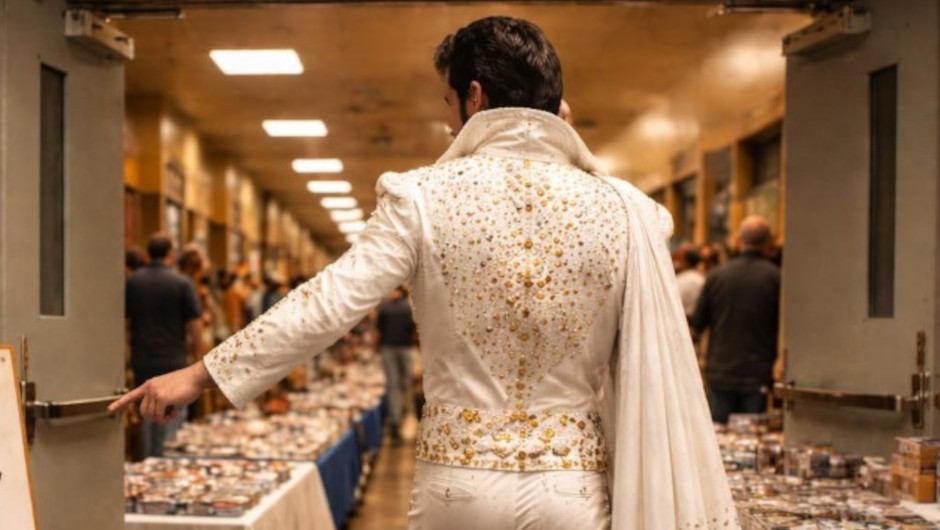
You never know who you will meet at a baseball card show. Mike Cramer, who would go on to found Pacific Trading Cards and introduce the word “prism” to the hobby, once ran into Elvis Presley in an elevator on his way to his first show floor.
Cramer went to his first baseball card show in Detroit back in 1970 when he was 17 years old. This was billed as the first national level event of its kind, attracting collectors who had previously been relegated to classified ads in Trader Speaks and The Sporting News and sending self-addressed stamped envelopes to strangers. Cramer took the phrase “card show” literally. He packed up a footlocker full of his best cards and hauled it to Detroit, figuring the whole point of the event was to show off your collection to other collectors and swap stories about the ones that had gotten away. He brought complete sets of 1930s Goudey cards, scores of Ramley tobacco cards, and a full 1952 Topps set, casually lugging around what would now require an armed escort.
Cramer walked out of the elevator and opened up his trunk in front of the first dealers he met, Frank Nagy and Lloyd Thorpe. Wondering if they were about to spend their entire buying budget in the first hour of the show, the pair were surprised when the teenager simply told them the cards weren’t for sale. He just wanted to show them to somebody who would appreciate them.
Nagy and Thorpe were floored. Possibly the best collection in the room had just been walked into the room under the mistaken belief that “card show” meant “show & tell.” Fearing that a lamb had just blundered into a livestock auction, the two men quickly disabused Cramer of the notion and warned him to close the trunk and get it locked away in his hotel room as soon as possible.
When I read Cramer’s account, I thought to myself that I would actually love to go to the kind of show he thought he was attending. Just a bunch of collectors sitting around, showing off their cards, telling the stories about how they acquired them, and discussing the merits of various sets and players without the underlying adversarial negotiations of making a show hit your ROI metrics. It’s the difference between a book club and an antiquarian bookstore.
I’ve entertained a fantasy of renting table space at a major show and setting up a pair of comfortable leather armchairs instead of the usual folding table with glass showcases. I’d put up a sign inviting show-goers to “tell me about your collection” and just spend the weekend listening to their stories. No buying, no selling, just conversation.
This is not going to happen any time sign, at least as long as good shows continue to have waitlists for vendor space that require knowing a guy who knows a guy. I still like to think about it anyway. So, when I found out about a local venue hosting an actual “Show & Tell Card Show” where collectors set up but explicitly are not allowed to buy or sell, I signed up for a table immediately.
The show was held in one of those nondescript buildings that exist in every town, the kind of place that hosts retirement parties, blood drives, or bingo games of dubious legality. Think Elks Lodge or Moose Lodge or some other civic organization named after a large woodland mammal. The space filled two rooms connected by open double doors. A flipchart sign read “Coffee” with an arrow directing traffic into the second room, which I appreciated even though I’ve historically been a soda guy. Coffee is one of those acquired tastes that crept up on me as I got older, kinda like caring about yard maintenance. I still prefer Pepsi when given the choice, and judging from the chilled red white and blue cans that had been set out on the collectors’ tables I wasn’t alone in this preference.
I was in the first room with five other collectors. Each of us had been provided the standard 8′ folding table and a single showcase to display our cards. Most had brought extra boxes and miscellaneous items that were tucked behind their tables, ready to be produced if someone showed interest. The thing was, there were no other people in the room. No guys with backpacks browsing tables, no pelican case-wielding crowds milling about. Just the the six of us, standing behind our tables like actors in a play with no audience.
With no formal announcement, we gravitated to the first table, manned by an eager 9 year old wearing his little league uniform. Behind his table stood piles of flimsy, beaten binders who Sharpie labels revealed past lives as repurposed elementary school supplies. Each binder represented a different MLB team and was overflowing with nine-pocket plastic sheets containing endless junk wax and base commons, all stacked in alphabetical order from Angels to Yankees.
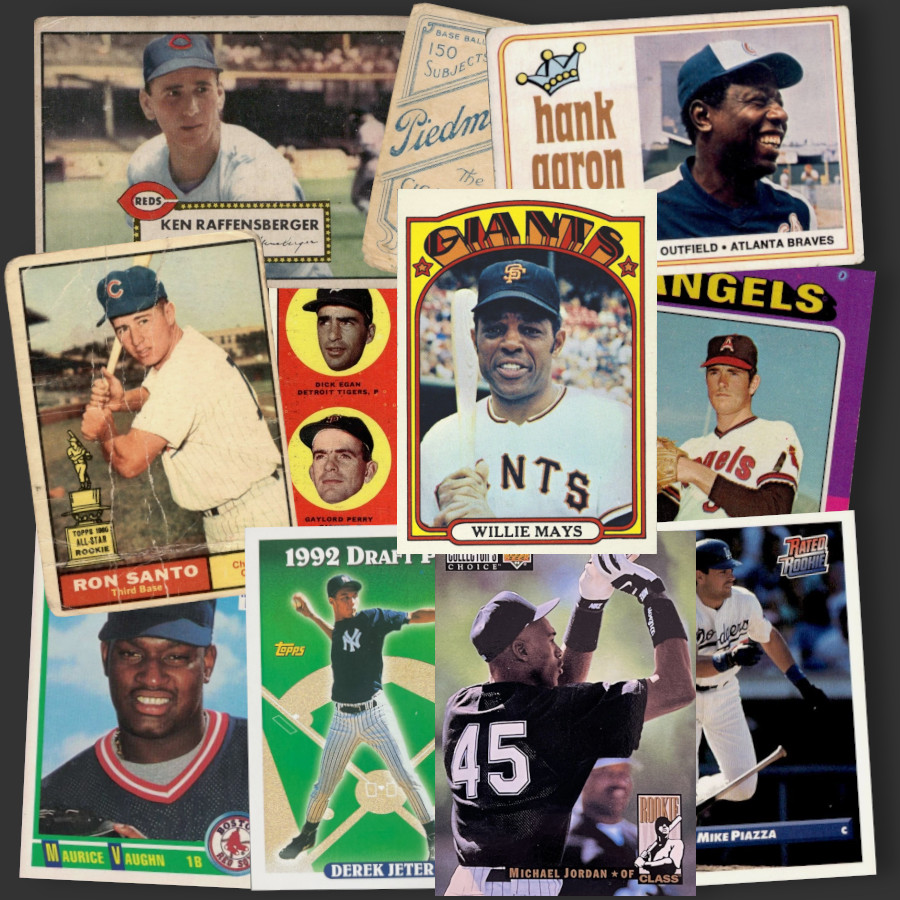
The marquee names, those any 9-year-old would recognize from ESPN highlights, were in a purpose built D-ring affair he simply referred to as “the good cards binder.” He took pride in explaining not only who was in it, but how he had arranged cards in the pages. All too often the cards in the column closest to the binder rings would get caught in the binder and warped. Those in the outer top and bottom spots were at risk of damage when carrying the thin binders in a backpack. This meant packing the best cards in the center column of each page, a tip he was adamant about passing on to the rest of us. When asked by an older kid if he had any vintage to show, he hit us with these:
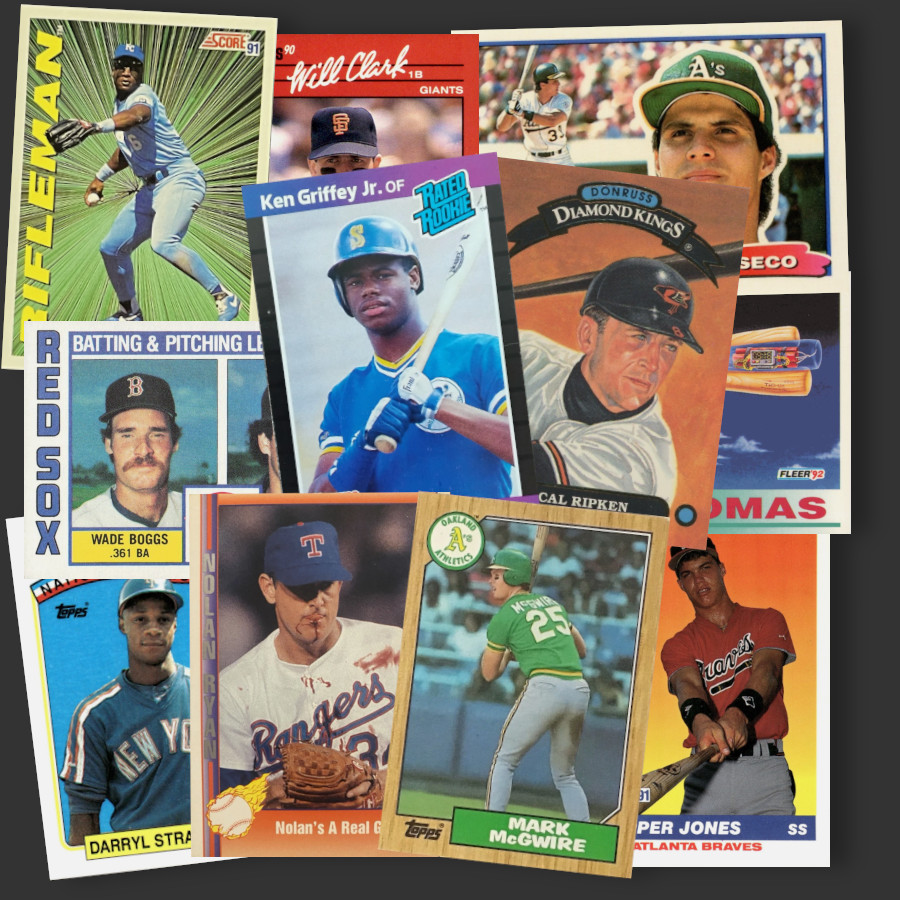
The voice looking for vintage cards then led us over to his setup. He was a couple years older than the aspiring outfielder with the binders and had two massive 5,500-count cardboard monster boxes anchoring one end of the table. One box had been decorated with lime green and purple markers to say “Danger! Monster Box” and had an oozing slime motif drawn around the edges, looking something akin to a tribute to the cover art of something written by R.L. Stine. Inside were thousands of base cards and low level inserts arranged by set, though a fraying grayish brown segment indicated the presence of some 1970s names in one row. He particularly enjoyed old checklists that prior owners had marked. These allowed him to look at someone else’s vintage collection through time and imagine what it must have been like to pull those cards from packs.
What made this kid’s collection interesting was his type card collection, which was spread out in the glass showcase. He had an absolutely wrecked T-206 card with a Piedmont back and examples of every Topps issue from 1952 to the present. Several vintage cards had clearly captured his imagination, and he was most proud of a high grade 1972 Willie Mays and a ’75 Topps Nolan Ryan with a bit more wear (Look! He was on the Angels back then!). The young collector was relieved to learn from the older attendees that the black line on Ryan’s sleeve was a memorial ribbon for a fallen teammate and not a stray Sharpie mark.
A few more rookie cards made their appearance, including Hall of Famer Ron Santo and the White Sox’ not quite Hall of Fame outfielder Michael Jordan. We had a good time figuring out why some type cards were specifically sought out and which ones were the result of availability and circumstance. The Mays card was stunning and was a purchase funded by his grandmother at a previous card show.
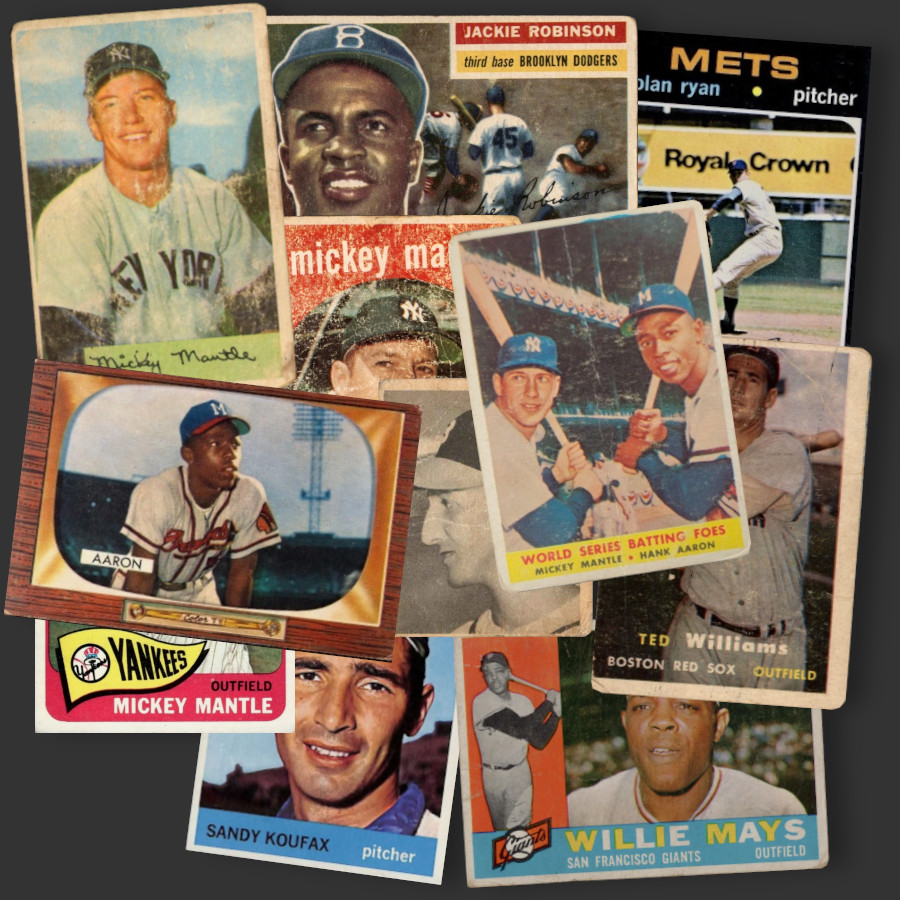
The third table was a monster and manned by a 17 year old (not Mike Cramer). His focus was also on vintage cards, but he did so with much more focus than the younger crowd. He had assembled the biggest names of the 1950s and 1960s and called out constant reruns of Ken Burns’ Baseball as inspiration for this pursuit. He had read The Mick, Mickey Mantle’s memoir, and pointed out that he had a dozen Mantles from his playing days. The cards were almost uniformly very low grade, but they were authentic and very much little bits of handheld history. I repeatedly scanned rows of cards and saw the same names appearing over and over again: Mantle, Mays, Aaron, Williams, Koufax, Ford, Spahn, Snider, Hodges. Jackie Robinson. When I asked him how he’d managed to acquire so many fantastic cards, he looked at me like the answer was obvious. “I mowed a lot of lawns,” he said.
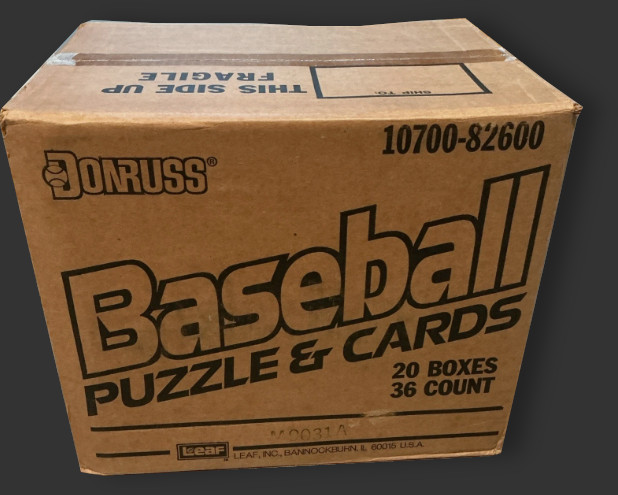
The next guy was a college freshman who obviously hadn’t gotten the memo that this was supposed to be a show and tell event rather than a place to sell cards. Everything on his table had a price tag made from brightly colored fluorescent posterboard. Bricks of hundred count lots of Frank Thomas and Jeff Bagwell were sitting unsold and he had literal cases of ’89 Donruss and ’89 Topps stacked like a homemade fort behind him. It was all cheap stuff he had picked up in bulk and was hoping to flip for a percentage of whatever the latest guides said. A small number of high dollar items were present, complete with notes stating they were cross listed on eBay and encouraging onlookers to act fast before they were gone. He kept looking around anxiously, probably wondering why nobody was buying anything and whether he’d made a terrible business decision to pay twenty bucks to set up at this “show.” He was clearly interested in hearing about the other collections, but it was clear he also had other things on his mind.
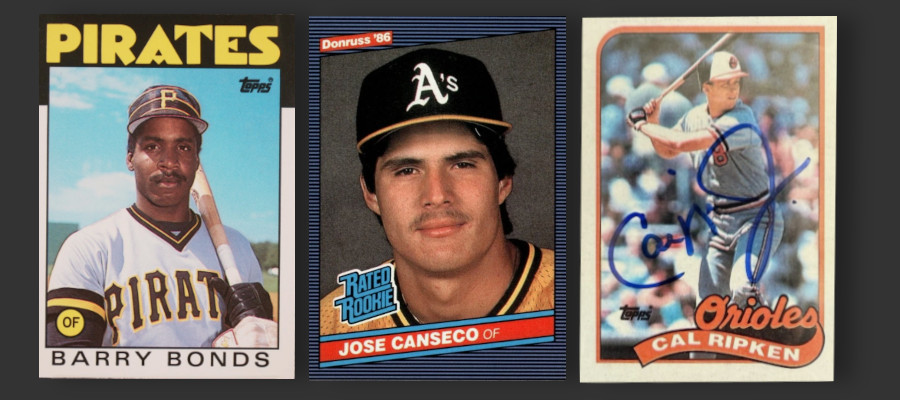
The guy at the table next to mine was a 32 year old father of two. His showcase was almost empty compared to the others. He had just three cards set up on little plastic stands: a 1986 Donruss Jose Canseco Rated Rookie, a 1986 Topps Traded Barry Bonds, and an autographed 1989 Topps Cal Ripken that he had obtained when he met the shortstop at a speaking engagement. He mentioned once or twice that he also had an autographed Canseco baseball somewhere at home, but he hadn’t been able to find it before coming to the show.
There was an apologetic quality to him, like he was acutely aware that his collection was no
longer what it once was and felt the need to explain it to the collectors that had taken the time show so many inspiring cards. Perhaps it was just chronic exhaustion. I couldn’t blame him as he went through a Diet Pepsi and a coffee infused can of Monster in quick succession. He had a kid in preschool, another in diapers, and a mortgage, all while navigating a career pivot and wrapping up grad school in the evenings.
We talked for a while before turning to my showcase, which had been filled with three rows of cards sampled from my set building projects. The ’49 Leaf Honus Wagner was there, complete the photo of his overstuffed bag of chewing tobacco in hand. My ’52 Mays was compared with the one offered for sale at the student’s table, as was a ’52 Topps Duke Snider in the hands of the vintage collecting teenager. I even heard the unsettling phrase “vintage refractor” when the overhead lighting caught the line of ’93 Finest All-Star cards arranged at the top of the showcase. At some point I pulled out my wallet cards, which generally elicited a mixture of bemusement and concern from the small audience. As a reader of my site, you’ve already seen these cards and heard the same stories I told the others. CardBoredom is my show & tell card show.
Additional voices could be heard drifting from the next room, generated by people talking over tables that I couldn’t quite see. The room beyond the doorway was a litter dimmer, and I could only make out shadows amid the the fragments of conversation. It was an older crowd, from what I could tell, and they were generally clustered around the table distributing coffee. I’m in my early forties, though I am far enough away from 40 and self-conscious enough to leave it at that vague description rather than get more specific with an actual number.
That’s when I realized what was happening. The five collectors sharing this part of the building with me were not random people. They were me. All of them. The 9 year old with his repurposed school binders, the 11 year old with the type cards in a decorated monster box, the teenager who turned mowed lawns into to the most beat up Mantle cards you have ever seen, the freshman trying to hustle cards to pay for tuition and dating, the father too tired to find a lost baseball, and me building sets I had previously considered impossible. Each table contained my exact collection as it stood at different points in my life. Standing behind those tables was myself, oblivious of the transformations taking me to the next table.
The younger versions of myself didn’t seem aware of this revelation. They were too preoccupied with their own concerns. The 9 year old was lost in the joy of accumulation. The 11 year old was starting to develop taste and discerning which cards to chase. The teenager refined those preferences while developing patience. The college kid intuitively grasped the relative importance of cardboard among other competing demands for his attention, unemotionally making the appropriate trade-offs. The father continued this, recognizing there are seasons when cardboard takes a back seat to mortgages, grad school, and tiny humans who needed attention.
Each collection reflected not just my interests at those ages, by my cumulative knowledge, resources, and responsibilities. My current cards exist in a space with some breathing room. The time felt right to allow myself to have such things, but owning these cards would have been completely irresponsible and outright detrimental at any other point in my history. I don’t know what my collection will look like in the future, whether my interests will change or continue to intensify, or I will always be in a position to keep playing with expensive cardboard.
I walked over to the 19 year old version of myself and quietly slipped him a folded bill. “Take her somewhere nice,” I said. He looked confused but quickly pocketed the cash. I did the same to the guy in his 30s. “Get a babysitter,” I told him. He immediately understood the assignment and something like relief crossed his face.
The next room contained my future. I nodded to the earlier versions of myself and decided to step through the doorway into the unknown. “I’m going to get some coffee,” I told them. The college student looked up and asked if I needed to lock up my cards.
“I trust you,” I said, walking past the handwritten coffee sign and towards the door.
When did I become a coffee guy?