I’ve never seen the movie Fargo, but I have seen a guy in a wood chipper.
It was one of those spring days where the air felt hot in direct sunlight and just perfect in the shade. I came around the corner and there they were, the familiar fleet of landscaping trucks taking up the empty side of a wooded residential street. The workers had vanished. Their leaf blowers and mowers sat in silence after hours of announcing their presence throughout the subdivision. A big dump truck squatted at the curb, its bed weighed down with mulch and covered by a blue tarp. Behind it: a wood chipper. I walked past without thinking much of it.
Then I saw the legs.
Denim. Work boots. Silence.
I stared while my brain did that thing where it tries to use logic to explain away what the senses are clearly showing. I approached slowly, each step feeling like I was wading through mud, not knowing what grisly scene awaited me on the other side of those heavy-duty rubber deflector strips hanging down over the chute. The rest of the body was completely obscured.
I steeled myself—because obviously this thing hadn’t been running for a while. I would have heard it. Nobody was around. It was fine. Everything was going to be fine.
I pulled back the rubber flap. A very much alive landscaper blinked back at me, shielding his eyes from the sudden intrusion of sunlight.
“Are you okay?” I managed. A torrent of confused Spanish poured out in response.
This apparently served as some kind of signal, because the tarp on the mulch truck suddenly rolled back like a theater curtain. What I had assumed was an empty mulch truck was actually shielding the rest of the work crew, all of them sprawled across the mulch like it was a giant bean bag chair, scrolling through their phones in the shade.
After some back-and-forth, my broken Spanish and their amused English, I learned that everyone was just on break. The wood chipper, they assured me with the confidence of people who do this every day, couldn’t even operate without engaging a safety key.
I walked away shaking my head at the idea of napping inside a machine that could literally eat you in seconds, safety key or not.
They thought it was hilarious.
Dark Humor
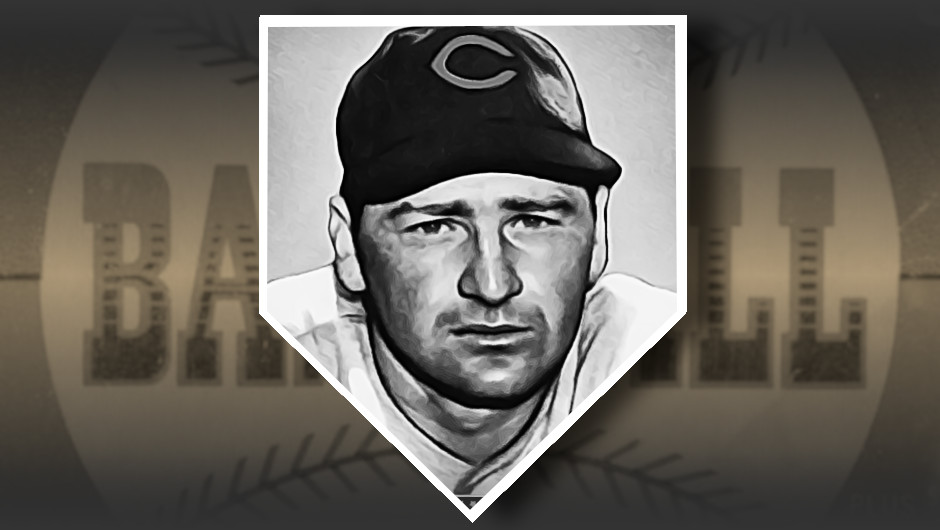
I think I know of a 1950s ballplayer that would have appreciated the moment far more than I did. Frank Smith, a mainstay of the 1950s Cincinnati Reds bullpen, did this as a prank during his single year with the 1955 St. Louis Cardinals:
![[Image: Frank Smith is seen standing on his tip toes with a noose from the ceiling around his neck, grinning through mock agony at teammate Stan Musial who is checking on his safety. Another Cardinal player is approaching the scene from behind with a genuine look of concern. Image captured by Francis Miller, used under personal non-commercial terms.]](https://cardboredom.com/wp-content/uploads/2026/03/FrankSmith_Prank_used_under_noncommercial_personal.jpg)
The image was captured on July 1 after Smith gave up 3 runs in an 11-7 road loss to the Chicago Cubs, a game in which he received no decision. Smith and teammate Stan Musial are seen grinning at each other, but a concerned Cardinals player approaching from behind appears to be trying to mentally work out the severity of the situation. That background player and I have definitely been on the same emotional path.
Photo Not Available
This image is the kind you joke about with people who share a similar sense of humor. As a public figure it is not the kind you want put into circulation as your publicity still. Luckily, us baseball card collectors came to the rescue.
![[Image: Front and back of 1952 Topps Frank Smith baseball card.]](https://cardboredom.com/wp-content/uploads/2026/03/1952Topps_179_Smith.jpg)
The back of my 1952 Topps Frank Smith card reveals that he is from Watertown, New York. I’ve seen that address before. That’s where Greg the Night Owl lives!
For anyone unaware, Greg is a professional sports editor with a rather expansive card collection. He documents this all on his blog, which has featured two separate pieces focused on the exploits of the hometown pitcher [You will want to read Brush With Greatness: Frank Smith and The Final Chapter?]. He extensively interviewed Smith and his family and, when the it was discovered that no photos of the former pitcher were available for a story, delved into his personal collection to provide baseball cards as a means to illustrate the story.
Using baseball cards appears to be a bit a recurring theme with Smith. Greg tells us of attending the dedication ceremony for the LaFargeville High School baseball field dedicated to the pitcher. A plaque was installed on the backstop in memory of Smith and, taking up more than one third of the plaque’s real estate, is an enlarged version of his 1952 Topps rookie card.
I suppose such a recognizable card was necessary to prove Smith’s baseball bona fides. “Frank Smith” sounds like a generic name Captain Jack Sparrow would provide to the authorities after getting caught hitting fungoes after hours on a high school baseball field.
Pioneering the Closer Role
Frank Smith is almost always written about as one of the pioneers of baseball’s closer role. He appeared in 264 of his 271 career games in relief, and was on the mound for the final out of 173 of the contests. In 1952 he had 110 innings of relief work (as well as a bizarre complete game spot start). His teams’ reliance on his arm for closing out games and a sidearm fastball that held batters to a .226 lifetime batting average provided obvious comparisons to this hallmark of the modern game.
That said, in an era far ahead of Aroldis Chapman or The Nasty Boys, the Cincinnati Reds and St. Louis Cardinals had yet to figure out how to effectively use a closer. Smith racked up 43 saves over the course of 7 seasons. In 1955, the season in which he was scaring teammates with a noose in the locker room, he was credited with just a solitary save. This wasn’t for a lack of trying. The same month as his infamous photo, Smith made 6 no-decision relief appearances with his team losing each contest.
This leads to one conclusion: These early attempts to establish a closer role didn’t envision his role as a way to nail down a game in the win column. They were attempts to stop the bleeding when a starter’s arm had already put the team behind. Smith and his low opposing batting average where seen as a tool to buy time for his team’s offense to try and figure out a plan.
I’ve looked and looked for a term that describes the opposite of a save, which requires a team to be winning when the closer makes his appearance. These weren’t blown saves (the Reds were generally already behind) and they weren’t holds (nobody else was getting the save either). By the traditional definition of a closer who makes his appearance in high leverage situations, Smith was not a “fireman.” He was something else.
There is a guy I sometimes see driving a decommissioned hearse around Richmond. This vehicle has a bumper sticker identifying the car as belonging to a “last responder.” I feel like Frank Smith would have laughed at that.
![[Image: Infographic showing Frank Smith's career statistical performance. 0.1 WAR, 4.39 FIP, and 106.5 FIP-. Smith ranks 6375th in CardBoredom's all time player rankings and 344th out of 407 in the 1952 Topps checklist.]](https://cardboredom.com/wp-content/uploads/2025/10/Infographic1952_179_v3.png)
![[Image: Infographic showing CardBoredom's 1952 Topps set completion status. The addition of this Frank Smith card takes overall completion to 64.1 percent, leaving 146 cards needed to complete the set.]](https://cardboredom.com/wp-content/uploads/2026/03/52CompletionImage_179.jpg)