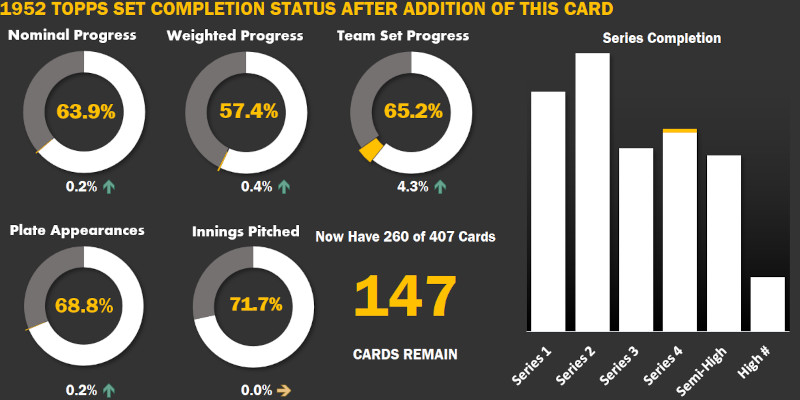
Catchers make up a disproportionately large part of the 1952 Topps checklist, particularly among the ranks of backups filling out the dimensions of this massive set. 16 teams are featured, so of course there are 16 starting backstops to collect. Add in 112 other position starters and another 100 or so pitchers to represent a decent sampling of a rotation and bullpen and you get the core 228 players that would be expected in any comprehensive baseball card issue of the day. With 407 names appearing on that season’s cardboard, Topps needed to photograph some backup players. Among the remaining 179 rookies and backups, the Sy Berger & Co most often dipped into the seemingly endless pool of backup catchers warming up at the edge of practice fields.
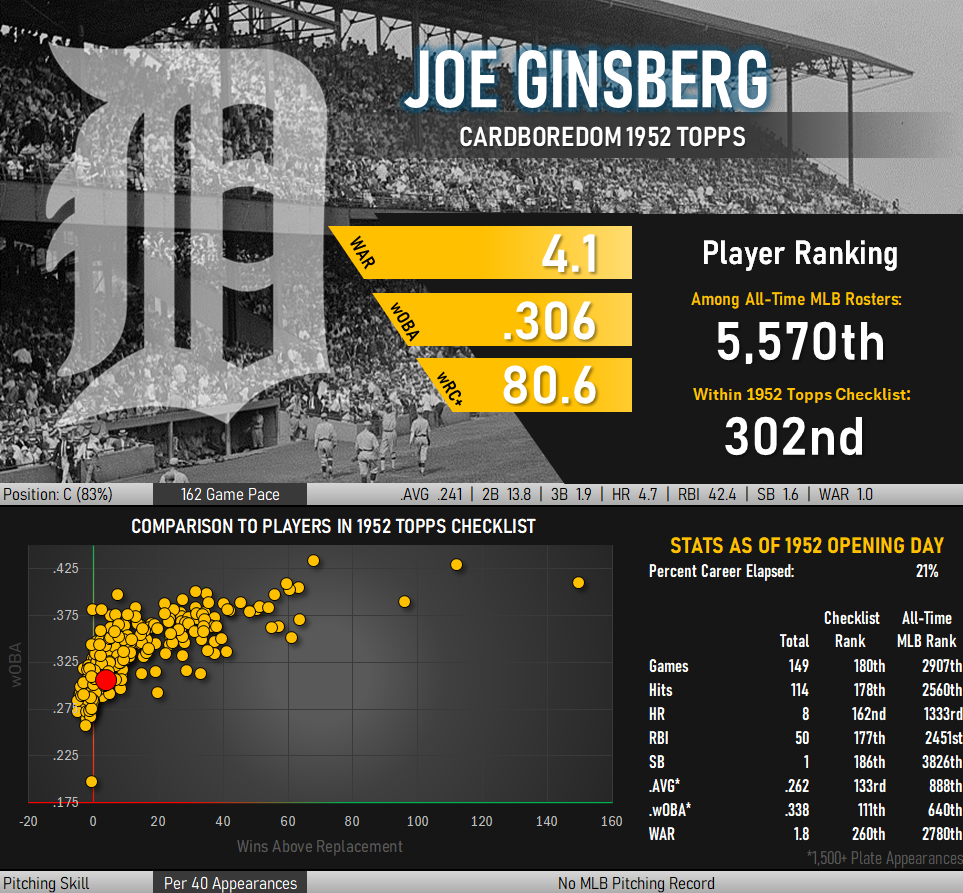
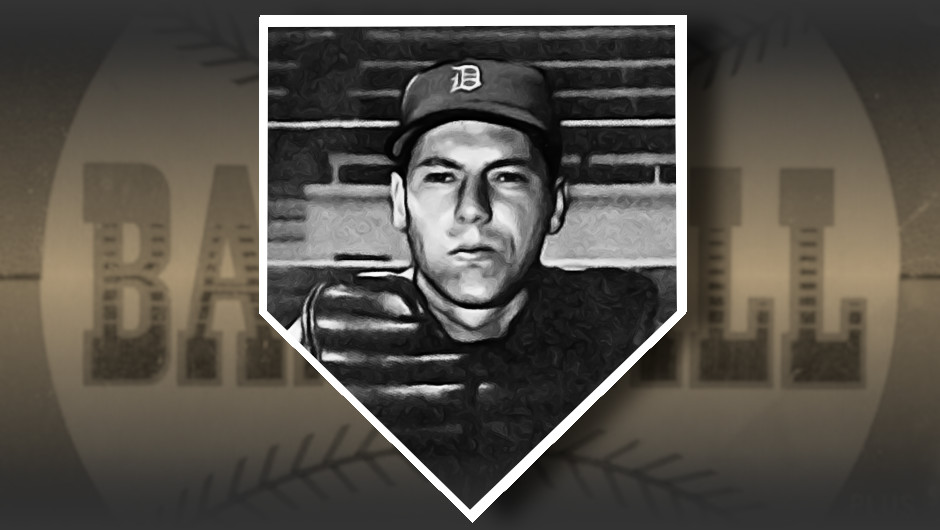
There are 48 guys who regularly donned face masks and shin guards for a living in the ’52 Topps checklist, making them disproportionately represented among the backup tier of players. Both the Red Sox and Pirates have no less than 5 backstops in the set, while the Yankees, Braves, and Tigers each have 4. Somewhere in those depth charts are guys who were the backup’s backup backup. Unlike 40 of the set’s 48 catchers, the Tigers’ Joe Ginsberg isn’t just pretending to be a catcher for the camera – he is actively wearing a chest protector – even if the stands behind him are completely empty.
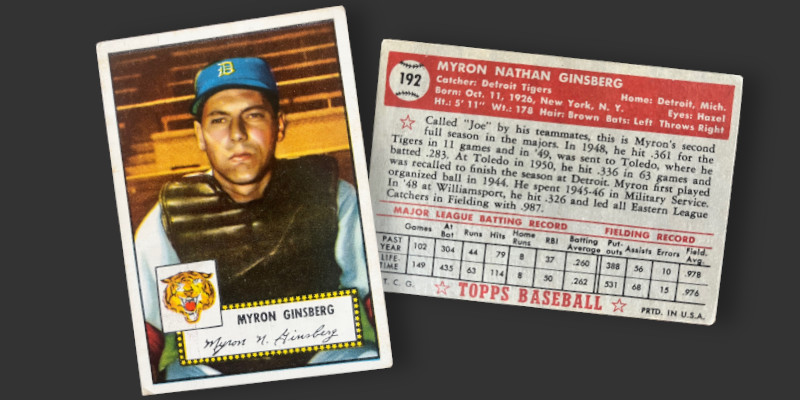
The bio on the back begins with the fact that Ginsberg is called “Joe” by his teammates, but not apparently by Topps. The photo on the front looks like the photographer has just said, “Smile for the camera Myron!” Ginsberg’s name came about due to a quirk in his upbringing. Legally named Myron, he was adopted as a baby and soon after everyone was calling him “Little Joe” in honor of his adopted father.
Although part of a multiplayer catching platoon when this card was produced, Ginsberg was the team’s primary 1952 catcher with appearances in a career high 113 games. Playing for a last place team that season, an ironically impressive feat in a league also inhabited by the Senators and Athletics, he caught a Virgil Trucks no-hitter and spoiled a potential Vic Raschi no-no with a ninth inning home run.
Despite having his defining season in terms of playing time and on field success, Topps would go another five years before putting him on another baseball card. By this stage of his career, he had transformed into an itinerant backup catcher whose other duties as assigned included serving as the occupational therapist/personal catcher of baseball’s other journeyman staple: Aging knuckleball artists. This is the point at which Ginsberg’s cards get interesting, and not just because he is seemingly in a different uniform on each one.
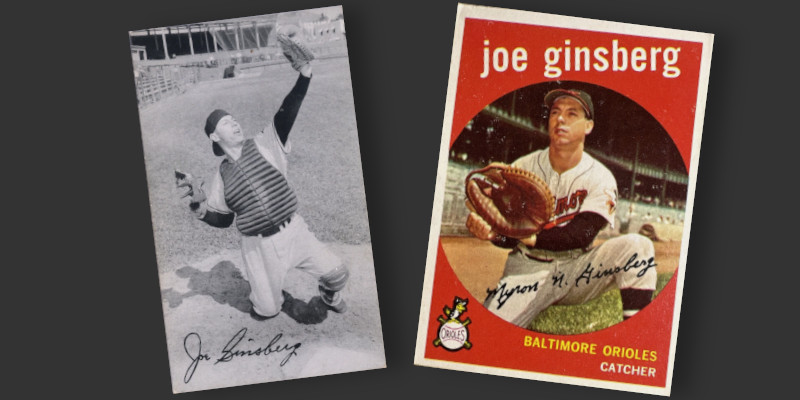
As a temporary member of the also temporary Kansas City Athletics, Ginsberg was featured on a 1956 postcard issued to drum up interest for the upcoming June 22 Livestock Night. What makes this scarce card so interesting is Ginsberg’s pose. He is holding his mask in one hand, and gazing towards his outstretched glove in preparation to snare an imaginary pop fly. It looks like he is taking a selfie.
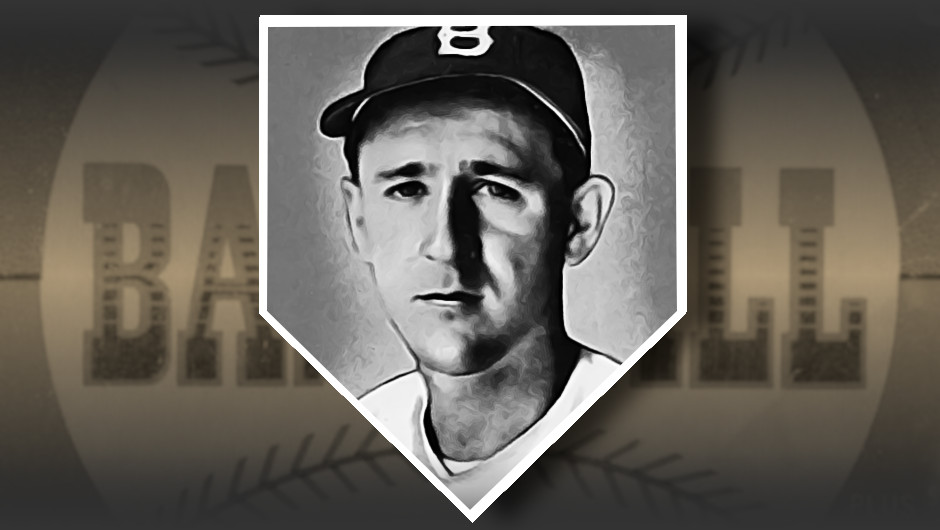
The card that is so memorable shows him as a member of the Baltimore Orioles. This ’59 Topps issue shows him again posing with his glove, but this is not just any piece of equipment. Ginsberg’s later career saw him use an oversized mitt to catch the erratic knuckleball of teammate Hoyt Wilhelm.
In addition to these teams, Ginsberg also saw action in the uniforms of the Cleveland Indians, Chicago White Sox, Boston Red Sox, and the expansion New York Mets. It is this last stop that would prove to be the end of his MLB career and one that would place him firmly in the sheer absurdity of ’62 Mets trivia: He’s sometimes referred to as the original Met.
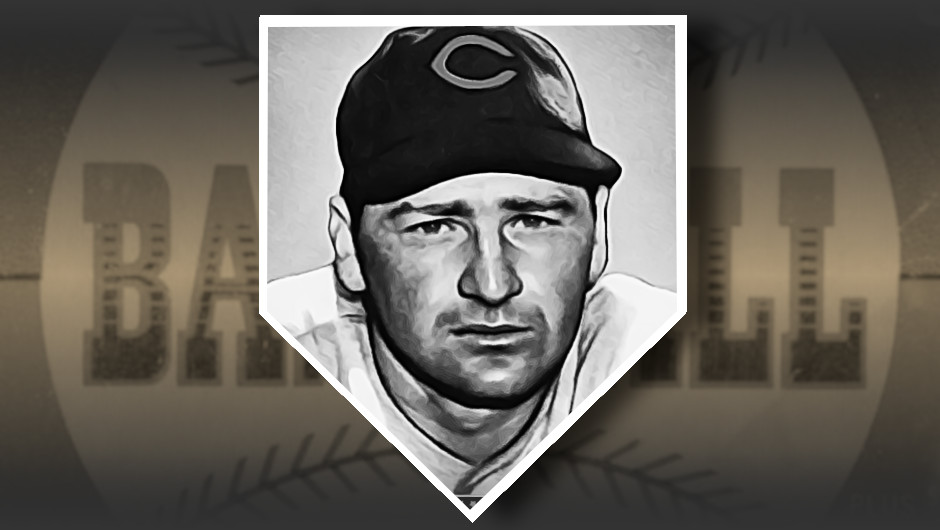
The Mets selected catcher Hobie Landrith (yet another catcher) as their first pick in the expansion draft. While Landrith got the start for the team’s first game, his hitless performance led to New York sending Ginsberg out as the very first Met at a home game. Ginsberg only played in two contests before leaving the team, making him one of seven catchers to play for the ’62 Mets. Backups were flying all over the place for this club, including Harry Chiti who was famously traded for himself that season in an odd use of the “player to be named later” clause.