I’ve been casing this place for three and a half months. I know its comings and goings, its price per night, the exact stretch of road where the traffic backs up at 4:15 on opening night. I know which door the VIPs use and which floor the pickup lounge is on. I have never once set foot inside.
That’s not how the movies tell it. In the movies, the crew studies the blueprints, times the guards and then, only when the British guy sets off the high tech diversion, they go in. My blueprints have been sitting in a browser tab since May. The job never got greenlit. But I did the work anyway, because at the start of the year I told myself I’d figure out, once and for all, exactly what it would take to pull off a trip to the National Sports Collectors Convention. Not go. Just know. Price it out, route it out, want-list it out, down to the dealer’s table where I’d theoretically be standing. Family, work, and cash commitments being what they are, actually attending wasn’t on the table this year. Understanding the job completely enough that saying yes someday would be automatic was.
We are now roughly a month removed from this year’s National, which set up shop at the Donald E. Stephens Convention Center the way it usually does every other July. Time to open the file and see what the surveillance turned up.
Getaway Driver
Every job needs an exit strategy, and mine had three options, none of which were cinematic.
I could drive. Fourteen hours each way from the edge of the Chesapeake Bay to the shore of Lake Michigan, which sounds brutal until you remember I get something close to 50 miles per gallon (the getaway car of a man who has fully accepted he will never own an actual getaway car). The mileage made it tempting but the math didn’t. Fourteen hours means an overnight stop, which means bolting an extra day onto both ends of the trip just to arrive upright, and once I got there I’d be paying $20 a day to park a car I’d mostly use to sit in convention-center traffic.
I could take the train, which in a detective story is where the mysterious stranger boards with a locked briefcase and a past. In my story it’s a 22-hour ride that costs more than flying and saves exactly zero time. Amtrak, in this instance, is not my accomplice.
This left flying: the boring option. A direct roundtrip flight from Richmond to Chicago runs roughly what the train ticket would, and gets there in a few hours instead of most of a day. Sometimes the least dramatic move is the smart one.
Safehouse
You don’t case a job without scouting where to hole up afterward, and this is where the planning got much more fun.
Three and a half months out, the hotels actually adjacent to the convention center were either sold out or the kind of “available” that makes you not want to touch porous surfaces. The O’Hare Airport Hotel still had rooms at $440 a night, a number that made The Loop District suddenly a more attractive destination. For that price, the Loop was not just competitive, it was the better crime. More restaurants, more trains, more to do when the show floor closes for the night. Cheaper beds existed further out (the Renaissance Chicago Glenview was the budget play I kept circling back to) but the suburbs don’t reward a pedestrian, and every ride into Rosemont becomes a small gamble against surge pricing. In the end, my hideout of choice was the Midland Hotel on Adams Street: walking distance to Union Station, and a $7.50 Metra ride from either O’Hare or the Rosemont stop two blocks from the convention doors. Efficient.
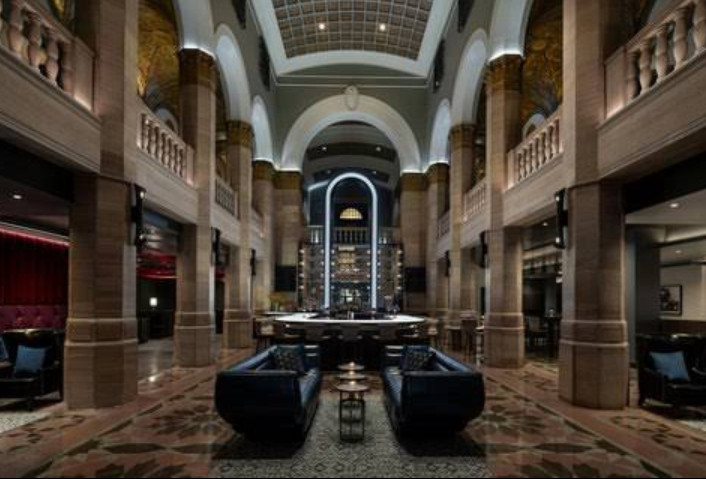
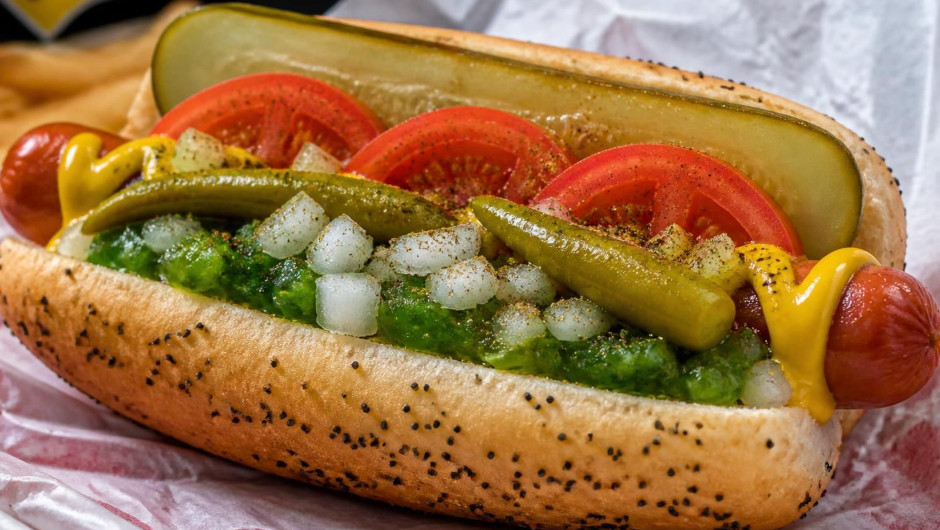
The neighborhood also solves the problem every heist movie conveniently ignores: what the crew does when they’re not working the job. I’d wanted to eat at Frontier, the kind of over-the-top, whole-hog spread that makes an excellent last meal before a big spend, except that just this month the restaurant quietly stopped daily service in favor of private events only, which means my one shot closed while I wasn’t looking. Portillo’s, of course, remains fully open for business and will be a non-negotiable stop of any trip to the city. Chicago’s other signature dish, the one involving a pan and a casserole’s worth of cheese, will not be considered; the city famously does not know what pizza is, and I refuse to fly a thousand miles just to be lied to about bread. If the calendar cooperated, I’d arrive early, and this year that would have meant catching Jinjer in concert before the show doors opened. There’s always a ballgame a short train ride away, too. No shortage of opportunities for a wallet-card photo, that much I can promise the file.
The Loot
Every job file needs a manifest: What you’re actually there to lift once you’re inside.
Ticketing offers day passes and full five-day badges, some of which bundle in swag and autograph vouchers I have zero interest in. Two single-day passes is sufficient for the entire plan. Between the hotel and the near-certainty of blowing the whole budget in a single afternoon, two days on the floor is the job, not five.
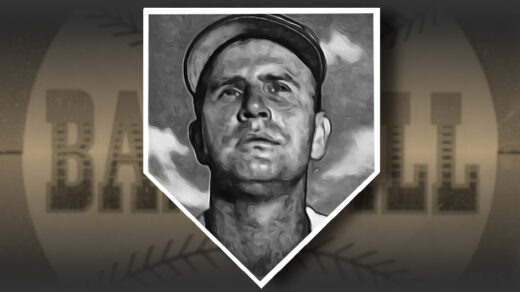
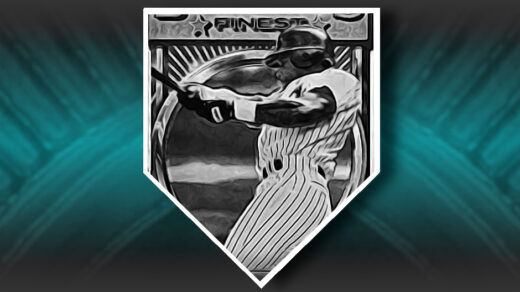
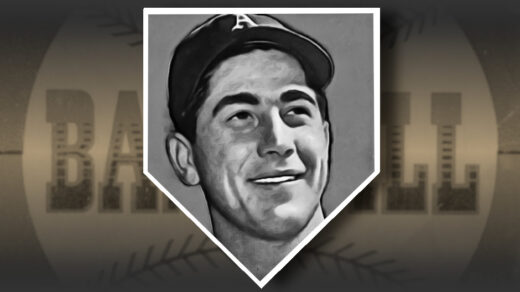
What I’d be after in that window stays close to home: openings in my 1949 Leaf want list and the stragglers left in my 1952 Topps run. Two full days of walking should put a real dent in both. A few beat-up 1953 Topps Charlie Bishops should turn up in the common bins if I’m patient, and I’d happily lose an hour just flipping through boxes for Jose Canseco. None of it is glamorous work. All of it is the actual job.
Every heist story eventually gets to the backroom safe, the item the whole plan was supposedly built around. And here’s my confession: I’m not convinced the National is actually where that safe gets cracked.
The sticker prices I’ve watched crawl across online showcase videos the last several years reflect a market where dealers know exactly how many out-of-towners just paid for a flight and a hotel room. The cards on my real want list, the ones you board aircraft to find, are almost universally available through the major auction houses at better numbers than the show floor tends to offer. Last year I landed a Rodeo Meats Charlie Bishop, the deranged regional-issue kind of card that actually turns up at a show like this and nowhere else, that’s the argument for going. But that card is safely tucked away in my collection. I’m not yet in the business of chasing a ’52 Mantle or a ’49 Satchel Paige, the tier of card where showing up in person and knowing the right dealer by name might actually matter. This particular hypothetical trip stays more modest than that. I might stumble into something big. I might not. Everything else on my list is plentiful enough that it doesn’t need to be hunted here specifically. There’s a long enough runway to find it elsewhere.
What I would absolutely take in, no surveillance required, is the museum of it all. I’m referring to the display cases of stuff too strange and too scarce to price, and the low-stakes pleasure of shopping for something to mail with a nice note to a fellow collector.
Let’s be honest with the file: a trip to the National is a vacation to baseball card Disneyland, and Disneyland is not cheap. Every card with a price tag on it becomes a game of Would You Rather. The same resources could just as easily fund a trip with my wife to the New York Antiquarian Book Fair (the National, more or less, for people who collect bound paper instead of cardboard). Or I could fly to Boston and watch a game from a seat perched on top of the Green Monster. Or, even easier, I could just have one extravagant card mailed directly to my door, save the difference, and call the whole operation a success.
Case Closed? Not Quite
I didn’t attend the National this year. I thought about it, though. I kept thinking about it, right up until I verbalized my answer to the Would You Rather question. My goals at the outset of the year weren’t limited solely to an imaginary trip to baseball card Disneyland. That goal had all along been limited to just thinking about going. The big goal requiring actual action in 2026 was to stop imagining adding an anchor card for the collection and actually get one into my hands. For less than the cost of Chicago travel I added this new card to the collection:
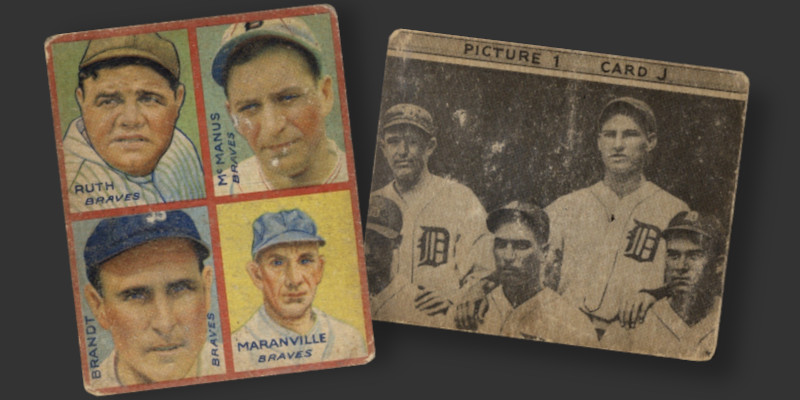
I’m still planning to eventually make my way to the show, but this 1935 Goudey Babe Ruth will scratch that itch for quite a while.
The blueprints are still in the browser tab. The safehouse is still the Midland. I know exactly what this job costs now, down to the Metra fare, which was the whole point of casing it in the first place. Someday I’ll actually go in through that door.
I’m still thinking about it.