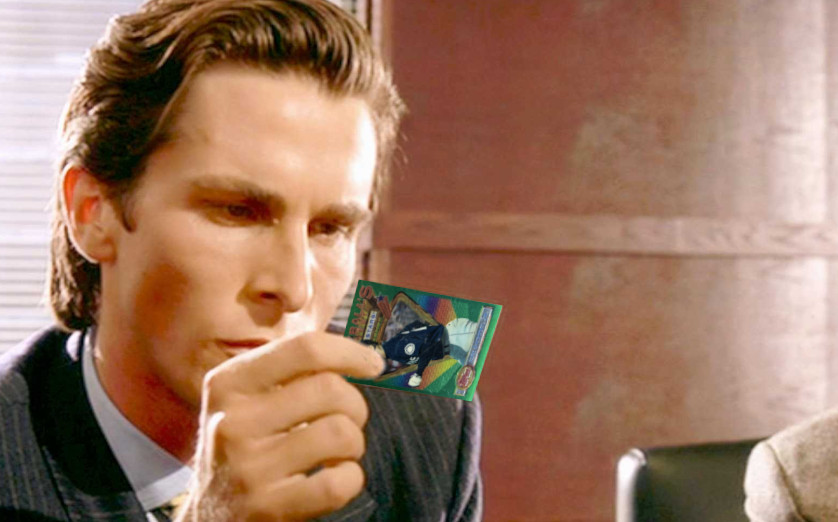

I like looking at baseball cards. I like looking at them in my own collection. I like looking at them in other people’s collections. I enjoy scrolling through pictures of far flung hobbyists’ cards online. I watch the goings on at various auction houses, entertained by what goes in and out their doors. I window shop through endless eBay listings, again enjoying the parade of interesting cardboard.
That last part, browsing eBay, has lost a lot of joy for me. I regularly review the site’s offerings of 1993 Finest Refractors, hoping to see lots of my favorite cards. I get tons of search results, but consistently mixed in 2-5% of listings are an assortment of obvious scams, mislabeled slabbed cards, and offerings from optimistic but willfully ignorant sellers. As of the moment I am writing this, 29 of the 738 cards (3.9%) advertised as refractors are base cards and the certainty of another 5 is in question. The percentage is even higher, entering double digits, when counting by sellers rather than individual card listings. Just a couple days ago someone paid triple digits for a base Mattingly card.
I don’t like where this mentally puts me. At all.
The Problem: These Aren’t Refractors
Topps issued less than 30,000 of each of its 1993 Finest baseball cards. This is a very limited release and one that gains considerable collector interest considering ~1% of the cards produced have a colorful “Refractor” finish. These parallel versions frequently command prices of 100x that of their base counterparts, creating a large economic incentive for dishonesty.
Refractors are easy to identify in person, provided that the observer knows what the colorful refractor finish looks like on these shiny cards. Fortunately, refractors have been at the forefront of the hobby for three decades. There should be nobody unfamiliar with them at this point. You cannot walk the halls of a card show without seeing thousands of refractor coatings on various set designs. It stands to reason that sellers who know enough about the keywords most used by refractor shoppers also have at least a passing knowledge of what the cards look like. To suggest otherwise implies an implausible level of ignorance, akin to anything thinking a table set up with $30 Rolexes in Central Park is in any way legit.
Several years ago I penned a guide to identifying refractors from the 1993 Finest set. A quick glance at any angular approach of light will let the viewer know what is in front of them. Knowledge of how the background and border areas of these cards reflect light in different ways makes the cards recognizable in photos. Check out these animations of base and refractor versions of the same card taken across various lighting conditions:
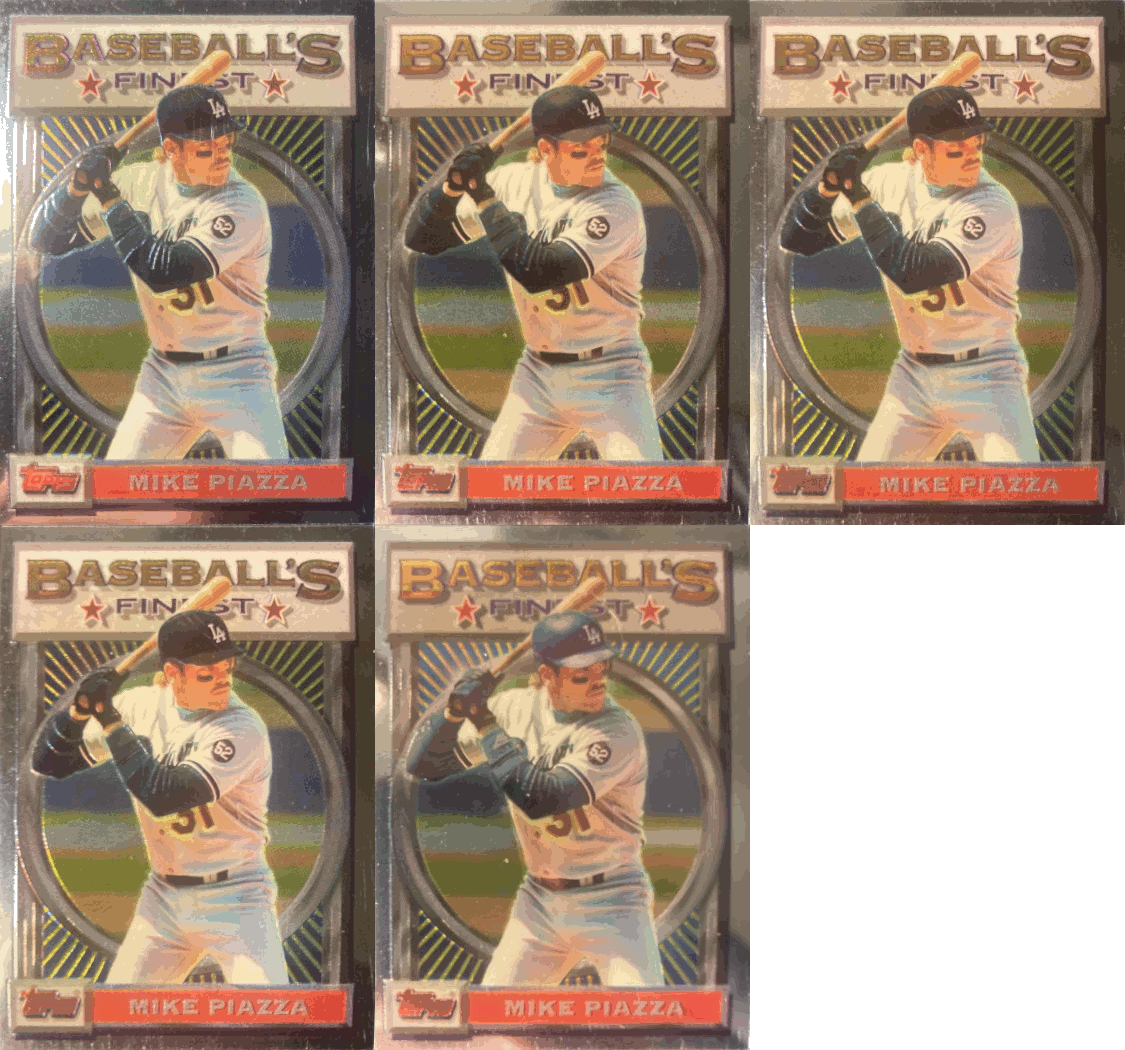
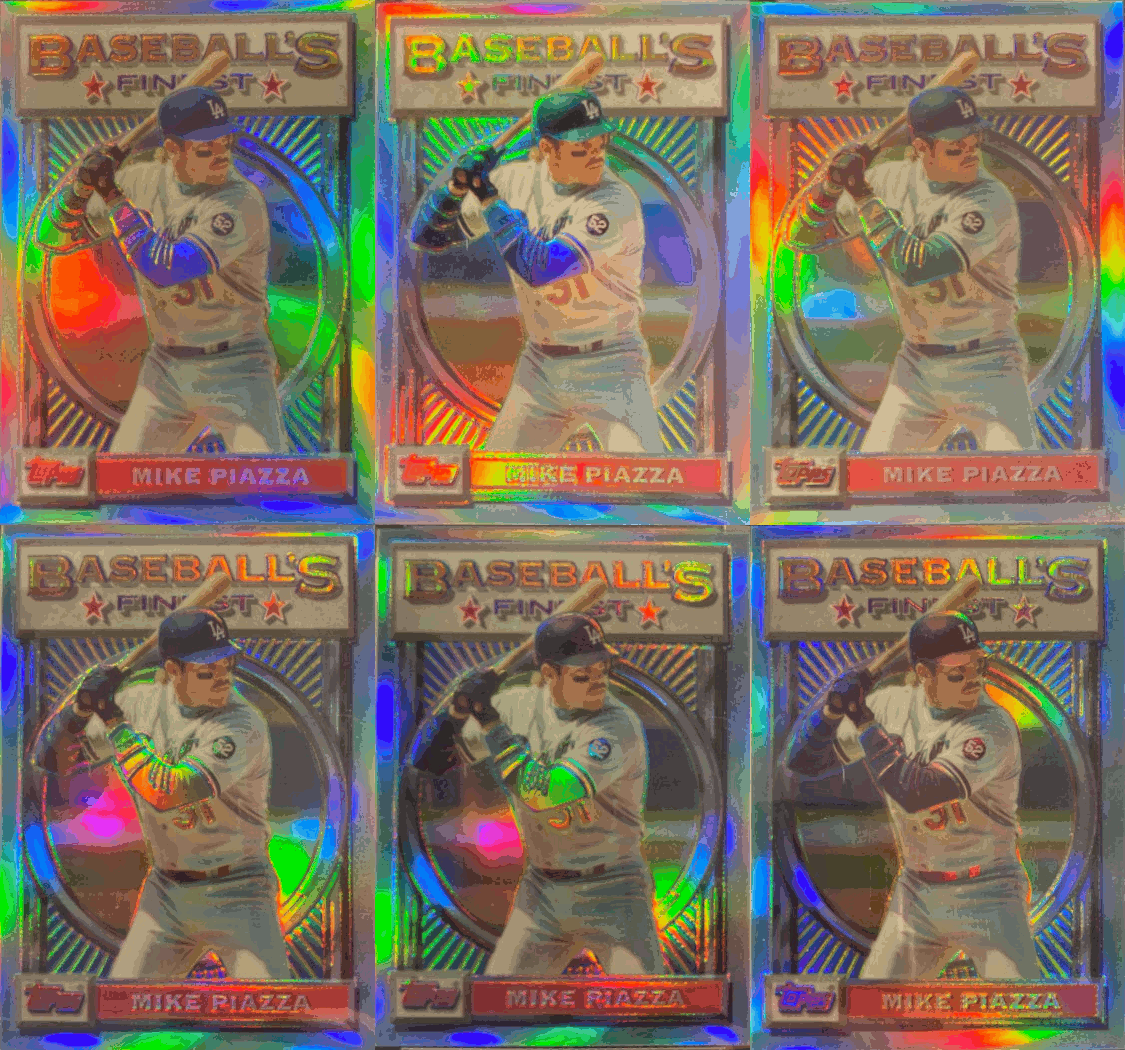
Examples: Obvious Non-Refractors in Ungraded Form
Here are a handful examples of the cardboard equivalent of advertising a Chuck-E-Cheese game token as gold bullion. In each I have grabbed a photo of the card as well as the title provided by sellers where they clearly indicate they are advertising a refractor. In each picture it is obvious that these are just base cards. Every single listing “conveniently” states no returns are allowed.
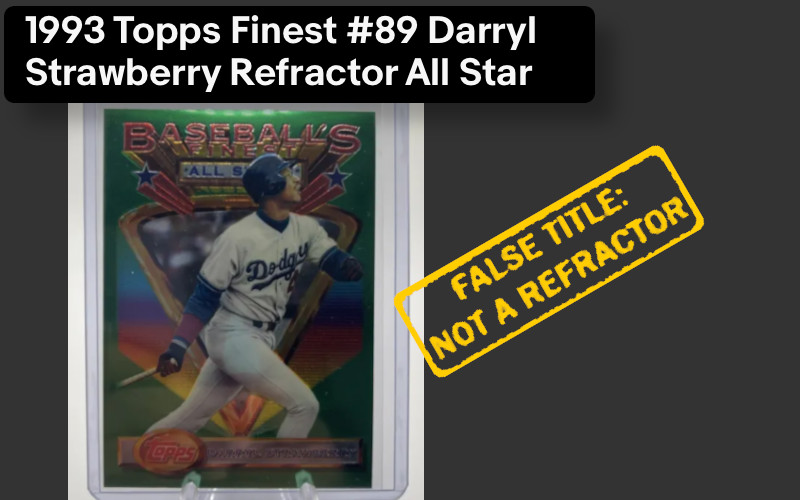
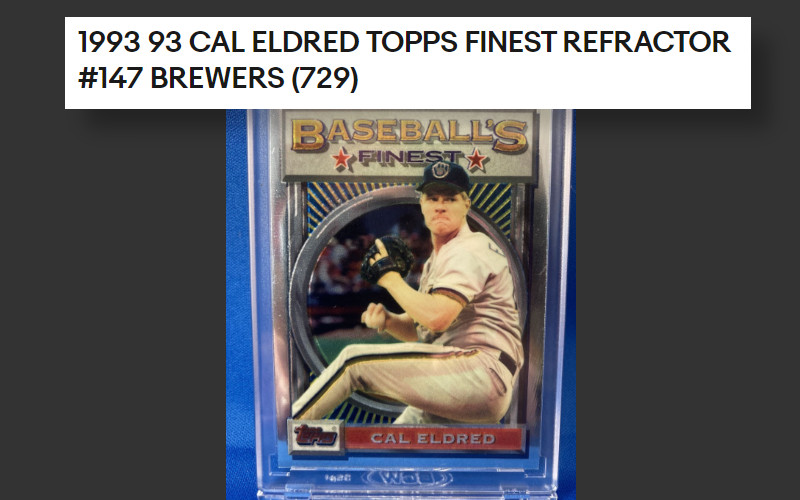
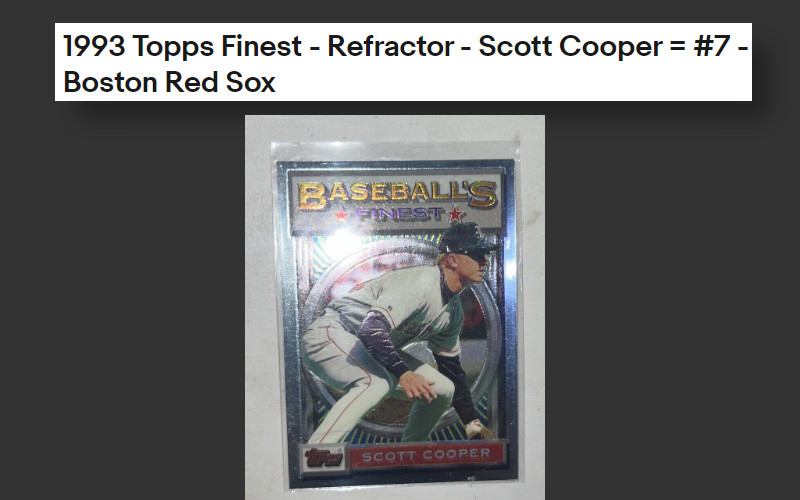
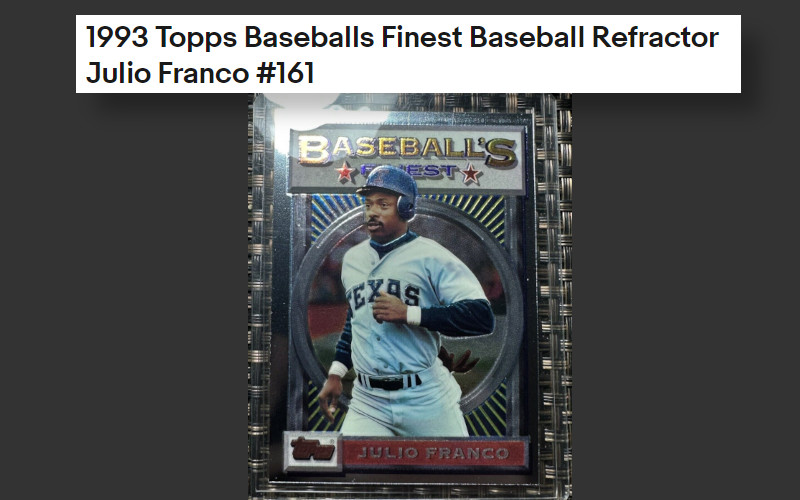
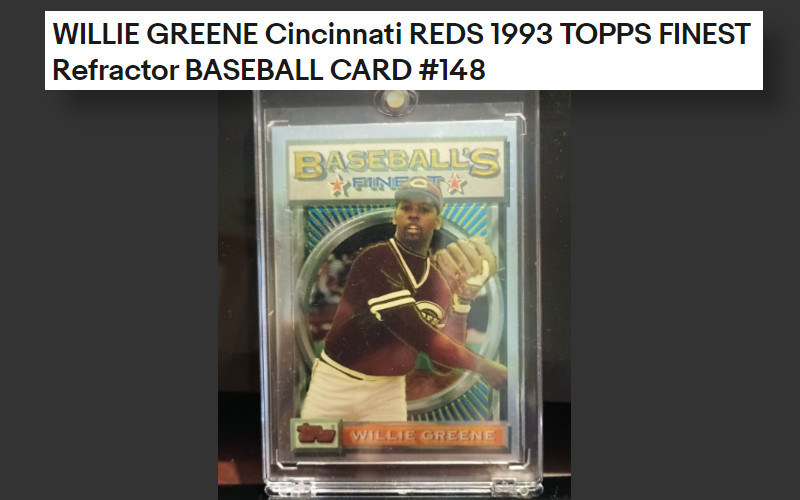
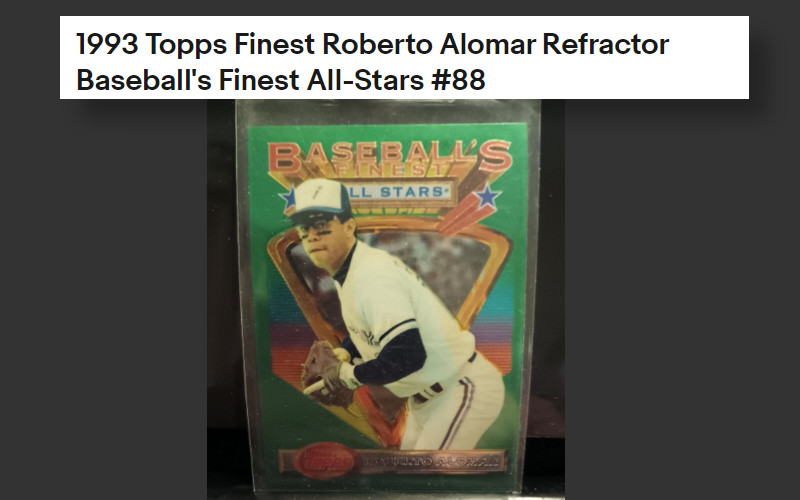
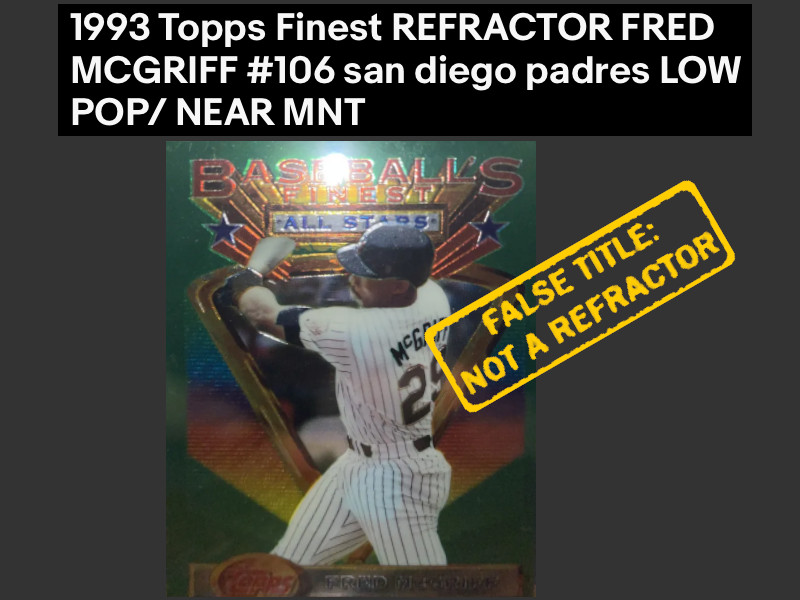
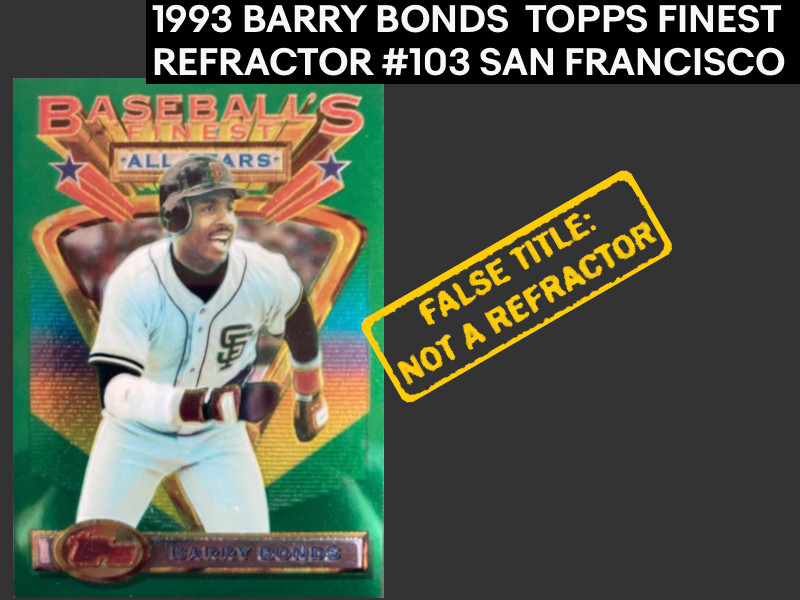
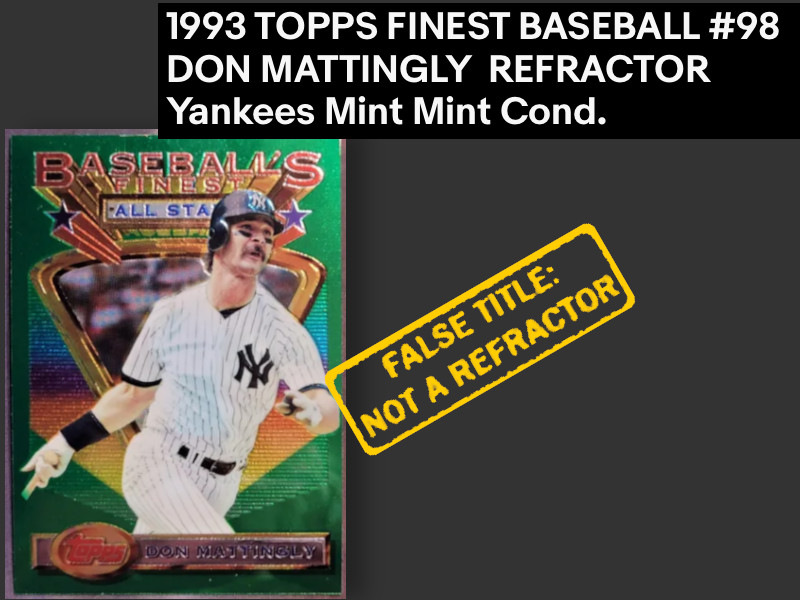
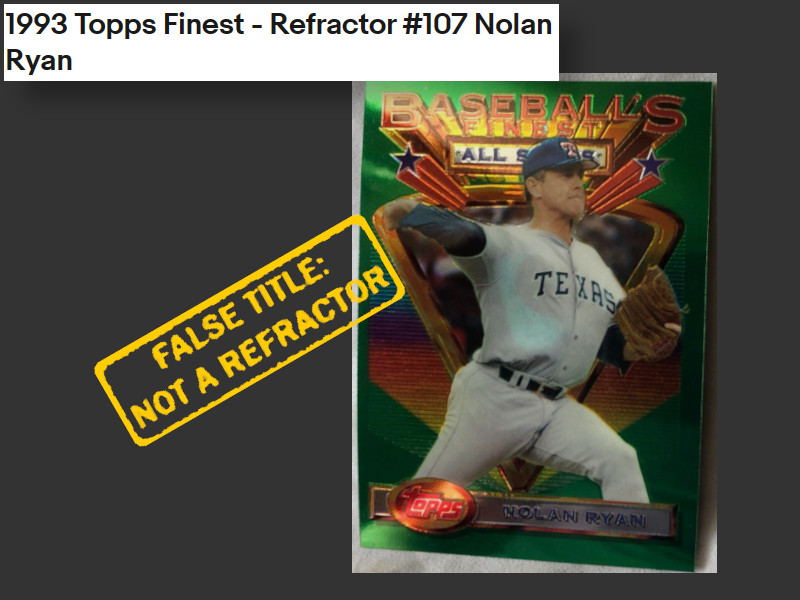
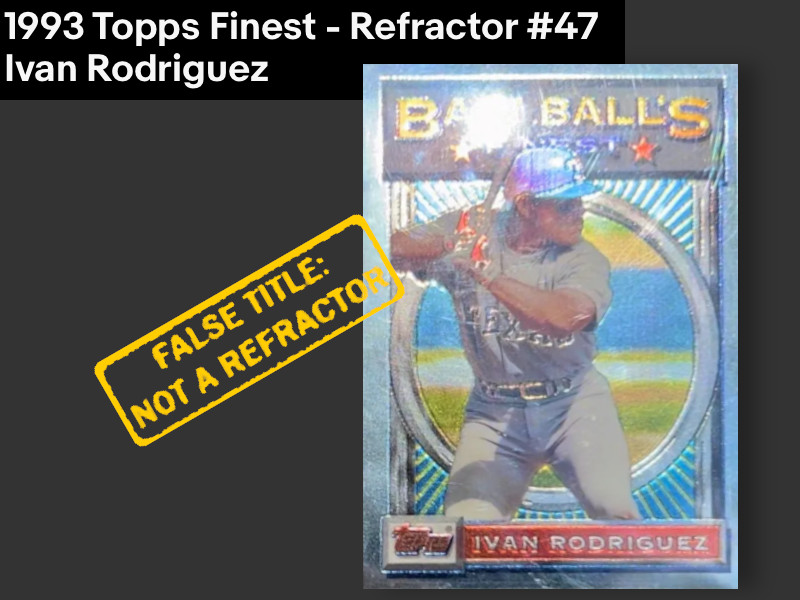
The Pudge card was particularly egregious. In the description the seller tried to claim it was an “error” that simply had missed getting its refractor coating.
Example: Mislabeled Slabs from Crappy Third Party(?) Graders
Garbage slabs are commonplace, with some sellers seemingly the only ones on all of eBay carrying these brands. The pretense of any legitimacy falls away so completely that most will omit the name of the grading company from their title or description. And guess what? You’re never going to see an actual refractor in any of these.
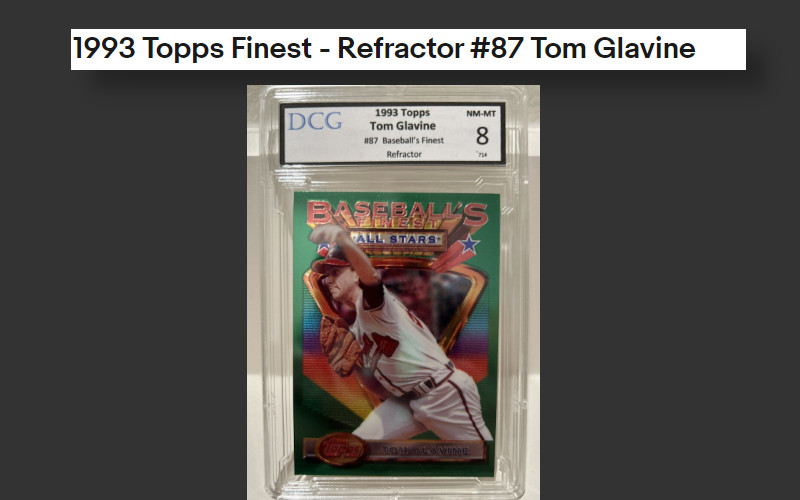
Examples: Mislabeled Slabs from Big Name Grading Services
Here is where I have limited (extremely limited) sympathy for sellers selling non-refractors as the scarce refractor variety. The big four grading companies (PSA, SGC, BGS, and CSG) have all shown levels of grading competence that have generally been accepted by the hobby. However, this does not mean they do not make serious mistakes. From time to time they will fail to notice non-refractors submitted for grading with an incorrect identification. The result is an easy to find base card getting an inaccurate description on the grading label. Collectors who rely on these firms’ opinions can be shortchanged when they fail to live up to expectations.
I have personally purchased a PSA graded refractor only to discover a misidentified base card inside the slab. PSA and eBay’s authenticity guarantee program both failed to catch the mistake but I was thankfully able to get the transaction unwound with PSA taking the card back and correcting their mistake. This was one of more than a dozen similarly labeled cards from the same seller, some of which are still floating around the hobby years later. By my records a mislabeled Roberto Alomar from that seller has since changed hands at least four times across two different platforms. Mistakes were made by PSA but at least they stepped up to make things right for my particular card.
Sometimes sellers notify buyers up front that the card being offered for sale has been misidentified. The Mike Piazza listing shown below clearly depicts a base card inside a refractor-labeled PSA 8 slab alongside a title stating the card is not a refractor.
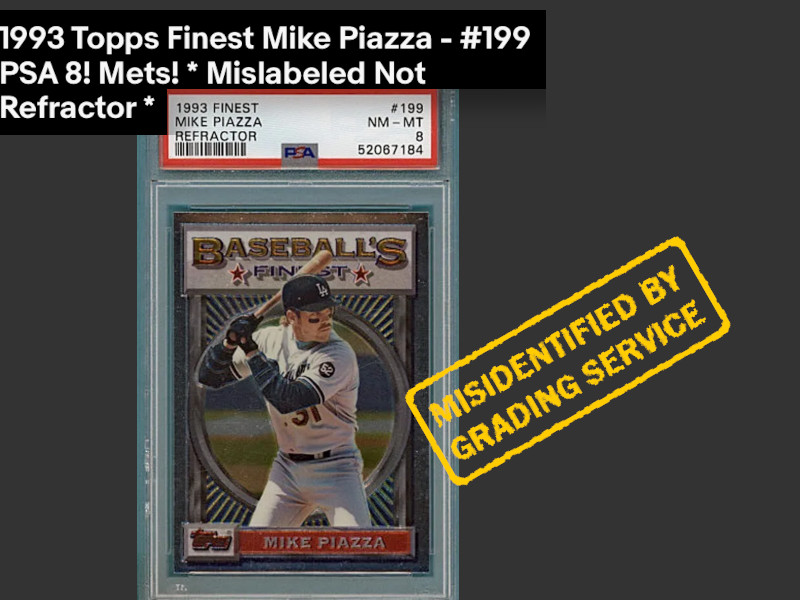
The title is better than what I have seen from most sellers, though it still falls short of ideal. There is nothing stopping a dishonest individual from purchasing the card and then passing it off as a refractor to someone else. In addition, the population report remains inflated. The card is still out there with PSA continuing to show the serial number (PSA #52067184) as being valid and active as of November 13, 2026.
Or how about this example, which illustrates how deep the problem goes when sellers are either deluded about their own responsibilities or are just an outright little bitch that hide behind “I’m not an expert…” excuses (their actions subsequently make it clear which camp they fall into). Earlier this year a collector purchased a slabbed Bo Jackson refractor for $900 and received a mislabeled card. In hand, it was immediately apparent that this was not a refractor, and he posted his experience on Reddit. The seller admitted doubt about the card’s identity, refunded the buyer’s money (but kept – in my view stole – a portion of the funds for fees), and promptly relisted the card. The card appears to have come back yet again, prompting yet another listing with the dreaded “READ” warning appearing in the title and a description disclaiming any responsibility for selling a bad card. The seller obviously failed the morality test. If they had unknowingly purchased a bad slab they could have availed themselves to the PSA guarantee, or if they submitted it themselves, they should have eaten their mistake and had the label corrected. This garbage slab is still out there and appears as active in the PSA database as serial number 48864382.
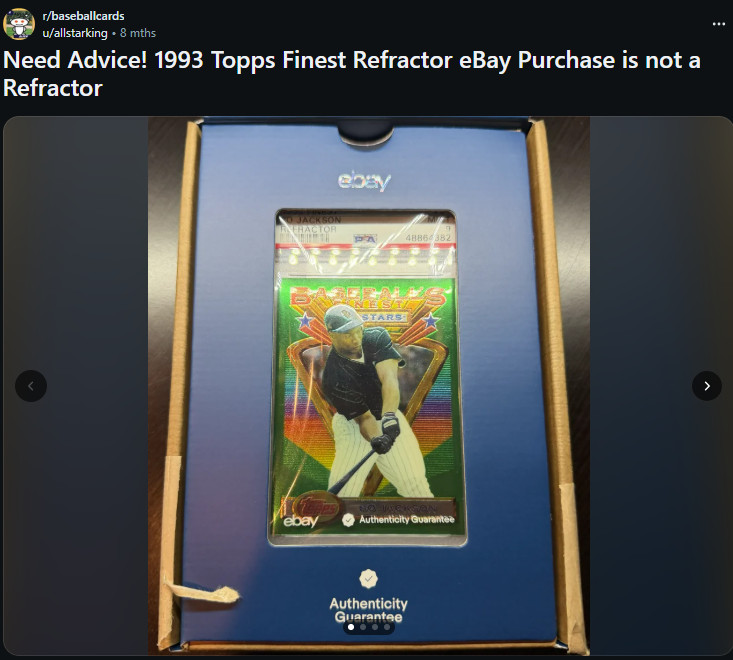
A few years ago I personally spoke with two dealers set up at the Chantilly card show who actually admitted to submitting base cards to grading services as refractors and leaving it to the grading services to correct their lies. The mislabeled cards getting through the TPGs are clearly not all accidents. And BGS, if you’re reading this, you should know I have in my possession an actual counterfeit refractor that got past your authentication process. It’s not the only one.
I try to largely ignore these listings when conducting my regular reviews of refractor transaction histories. Not because their presence would distort the underlying data (I routinely strip these from my database anyway), but because they send my overactive imagination to dark, if humorous, places. If I dwell too much on thieves and liars in the card industry I find myself mentally calculating how many loose 1991 Fleer commons I would need to suffocate someone under the weight of the cards. Or perhaps wondering why a room with a thousand obsessive keyboard warrior collectors who brag about how they would tackle a card thief if they ever saw one at a show don’t look around and menacingly surround a seller’s table filled with bad cards and fake autographs. That’s not healthy, so I step away and get solace from the idea that someone dishonest in such a small thing as a baseball card has a high likelihood of wrecking their life on their own through other moral shortcuts likely present in their life.
Dishonesty among sellers isn’t going away, even if eBay figures out to actually police its listings. I had a comically absurd interaction at the beginning of this year. I was offered some high grade high grade vintage cards from a dealer in Virginia Beach. The dealer had in turn purchased them from a man claiming to have acquired the cards by finding them in an abandoned car. I don’t know if he thought I would actually believe that origin story or if he was using such a preposterous story to test the waters to see how receptive I would be to fencing stolen property. That was my cue to remove myself from the area before I did anything I would later regret.
Excuse me. I have to return some video tapes.