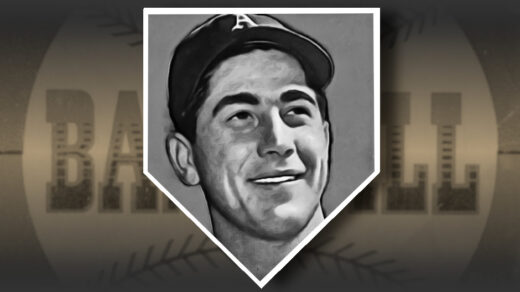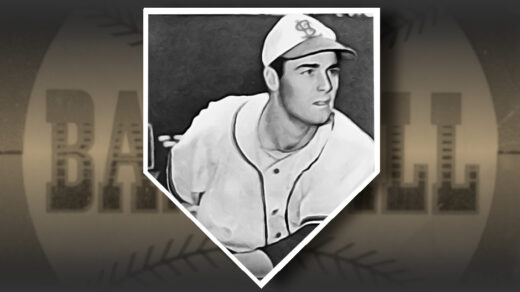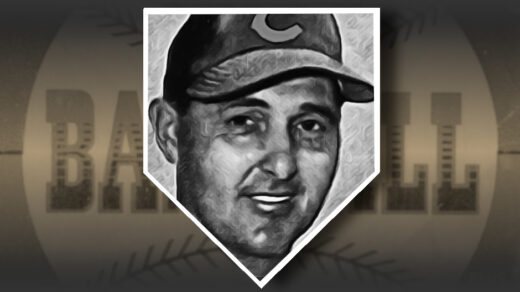

Stats have been a regular feature of baseball cards since Topps made them a standard feature with the cardboard sold with gum in wax paper wrappers in 1952. Reviewing the on field numbers on the back of cards has been a staple of the baseball card experience since that time. Almost equally revered has been the time honored tradition of completely ignoring the other stats on the card backs: Player demographics. Aside from a brief flurry of interest in tracking year over year surges in player weight during the Steroid Era, items such as height and weight have largely been ignored despite being a seemingly required component of card content for three quarters of a century.
I get it. Even if a collector cared about the exact birthdate or physical dimensions of whatever player is depicted on the card they are holding, it is a long acknowledged tenet of the hobby that the numbers are made up and at best were accurate only at one specific moment in time. We’re used to it.
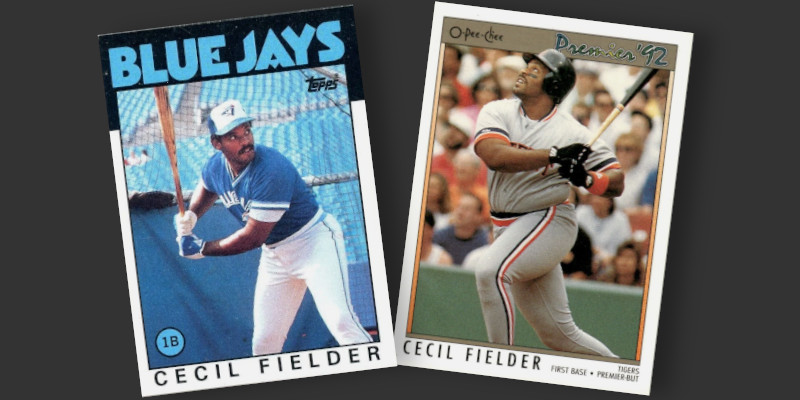
Bill James, upon reading that Cecil Fielder weighed 230 lbs., once quipped that he wondered what the figure would be if Fielder placed both feet on the scale at the same time. This didn’t really matter in the analog world in which a super-sized Fielder frankly hit better than not-quite-as-large Fielder. However, a question arose regarding the exact size of players when the independent Atlantic League tweaked its rules for the 2019 season. The league was introducing the Trackman Automatic Ball/Strike system, a piece of tech that pinpointed the location of pitches crossing the plate with rapid, highly precise ball or strike calls.
The strongest argument against the system wasn’t the accuracy of the sensors. It was the way the rules of baseball had been written in the 19th century. The strike zone was set in the 1880s as “…over home plate not lower than the batsman’s knee, nor higher than his shoulders.” That seems rather straightforward, and it worked with minor adjustments for well over a century. Edge cases were identified in the ensuing 130 years as players argued about exactly what constituted a pitch “over home plate.” Did it have to stay over the plate for the entirety of its passing the batter? Could it be a strike if it just nipped a corner and dove in or away from a batter? Designers of the ABS system had to apply the same precision of their pitch tracking to defining the strike zone. Leagues involved in the system’s testing subsequently adjusted the legally defined zone to match the constraints of the technology.
One final adjustment was needed before MLB could be ready to make ABS part of live ballgames. The new system could not accurately produce a consistent strike zone using the traditional shoulder-and-knees dimensions of the height of the zone. A player changing his stance could produce wildly different dimensions. The rule makers opted to simply define the height of the zone as a percentage of a batter’s height. Gauging how tall a player stands should be a fairly straightforward measurement: All you have to do is look on the back of their baseball cards. After noticing player agents and marketing guys exchanging nervous glances, it was decided to have the entirety of the active MLB roster measured under identical conditions to produce an official height for use in constructing each player’s personalized strike zone for the 2026 season.
The result? More than half of teams’ starting nines were shorter than initially advertised. Those who previously stood at the 6’0″ mark saw the largest adjustment, “shrinking” on average by nearly an inch from the round number so many had been mentally anchoring to. The back of next year’s cards promise to be more interesting than usual.
Let’s flip back to the backs of those cards from 1952. Topps was producing cards with nearly 50% more real estate to fill than its closest competitor and sought to make the cards as informationally dense as possible. This resulted in a lot of useful information, such as the now familiar statistical batting and pitching statistical grids adorning almost every card issued since that time. There were also height, weight, birthdates, places of birth, current home, throwing and batting preferences, hair color, and eye color.
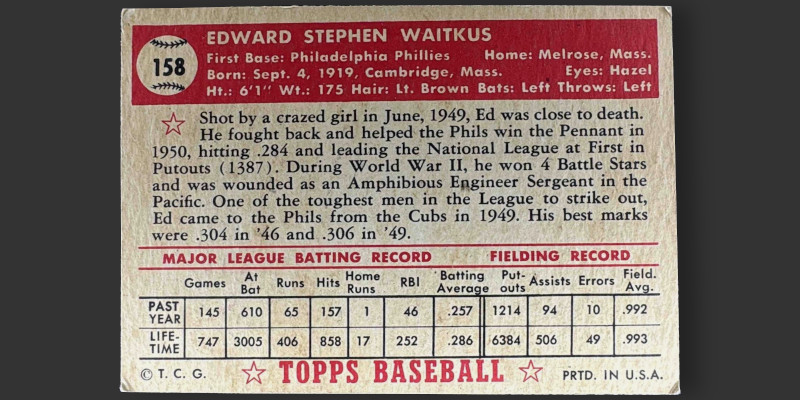
I’ve looked through all 407 cards in the ’52 Topps checklist, looking for trends among the more obscure areas of these demographics. I started out looking for the extreme outliers, but as I went along with this project, the names and their underlying numbers started to blur together. This led to asking the question, “Who is the quintessential ’52 Topps guy?” What player is so nondescript compared to the rest that he represents the absolute average ballplayer in the set without even trying?
1952 Topps by Height
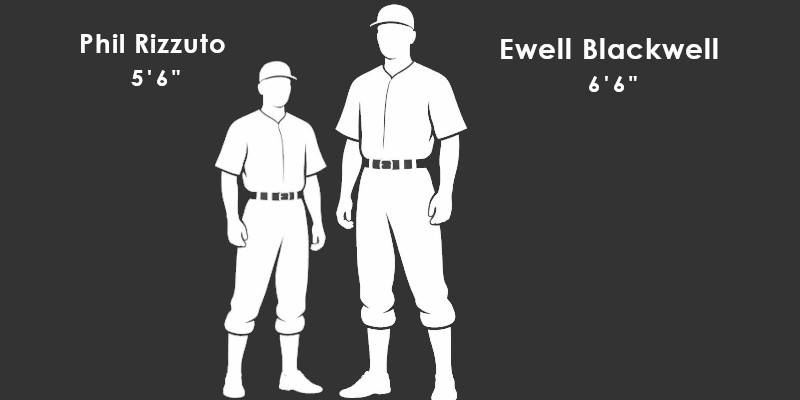
Let’s start with height given the remeasurement push for the current baseball season. Player height ranges from 5’6″ (Phil Rizzuto/Clem Koshorek/Chuck Dressen) to 6’6″ (Chris Van Cuyk and Ewell Blackwell), almost the same difference between Jose Altuve and Aaron Judge today. The average player depicted in the checklist stood an even 6′ tall with 22% of all names hitting this mark. The distribution of heights looks normal with a ±2 inch standard deviation.
1952 Topps by Weight
The weights reported on the backs of the cards range from 150-240 pounds with an average of 185 lbs. The Dodgers’ Billy Cox and Tony Bartirome of the Pirates anchor the lower end of the range. A few players were likely lighter than advertised given various reports of names like Billy Goodman, Tom “Muscles” Upton, and Cox all seeing their playing weights dip into the 130s towards the end of the season.
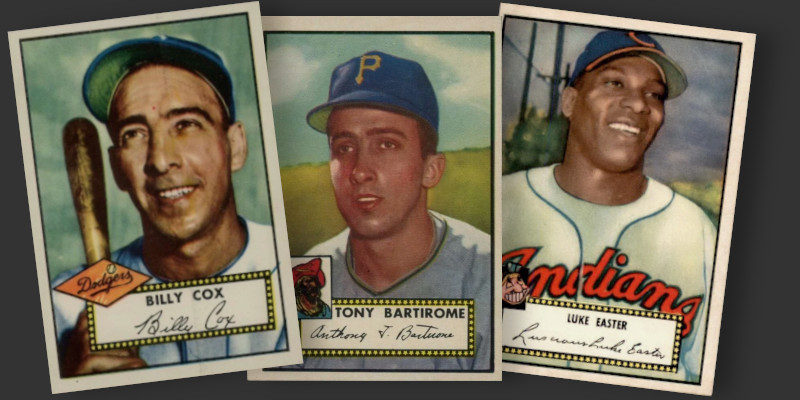
The Cleveland Indians’ Luke Easter tipped the other end of the scale at 240 pounds. “Big Luke” is interesting, as he is listed as a full 10 pounds heavier than the second heaviest name in the checklist, Steve Bilko.
Something I found interesting is the way the reported weights cluster around certain numbers, as if players were rounding up or down to the nearest five pounds. If you take 400+ people and weigh them under identical conditions, you would expect to find each possible ending digit to have roughly 40 names. However, instead of the 20% of names expected to appear with either a zero or five at the end of their weight, the collector finds 79% of the checklist ending in these round numbers.
Eye Color
As far as I know, this is the only set in which eye color is a recurring item to be reported to card collectors. Eye color is generally classified into six groups. Topps reports players falling into five of these categories with no examples of amber eyes found in the checklist. Seeking to be complete, the company still managed to classify players into six categories with the addition of “Blue-Grey” as a recognized color for Pittsburgh Pirates pitcher Murray Dickson, the only such example in the set. More than 80% of the checklist has brown or blue eyes, with brown being slightly more common (175 out of 407 players). Blue eyes are vastly more common than in the general human population, while the prevalence of green eyes more closely match the American population at almost exactly at 5% of the checklist.

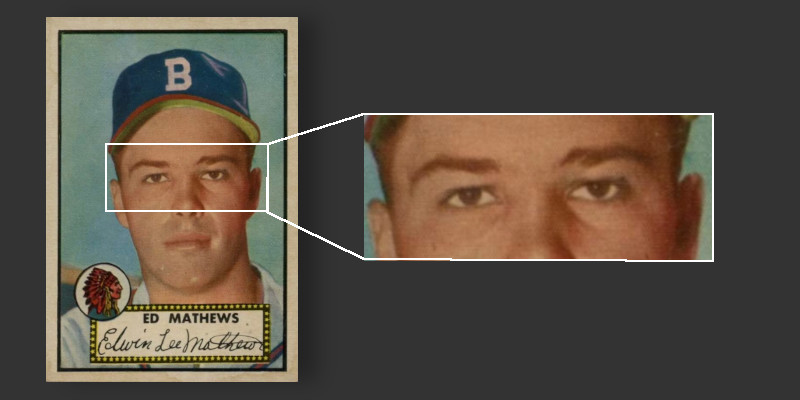
Why would Topps think this was information that collectors wanted to know? Perhaps it was one more datapoint that could be used endear the cards to kids through evoking a thought of “this ballplayer is just like me.” More likely was the desire to fill space on these large format cards while appearing informational. Even more likely in my view is that the collectors opening packs were not the target audience for this information at all. The original photographs were black and white, requiring coloring via the work of artists using Flexichrome. Topps likely provided these contract workers with datasheets containing hair and eye colors to instruct which pigments to use, data that was sometimes treated more as a suggestion, as evidenced by cards like the set’s Eddie Mathews card.
Hair Color
With the exception of Athletics back-up catcher Joe Tipton, everyone in the ’52 checklist is wearing a hat and hiding their hair from the camera. Topps still thought hair color was important information to give to the art department and included it on the back of every card in the set. More variation is shown in hair colors than eyes, and the nine labels assigned by Topps line up with some of the color scales in use at the time.
| HAIR COLOR | COUNT | % CHECKLIST |
|---|---|---|
| Black | 78 | 19.2% |
| Dark Brown | 2 | 0.5% |
| Brown | 247 | 60.7% |
| Light Brown | 11 | 2.7% |
| Auburn | 4 | 1.0% |
| Blond | 52 | 12.8% |
| Sandy | 5 | 1.2% |
| Red | 6 | 1.5% |
| Grey | 2 | 0.5% |
Keeping up with the Pareto Principle seen at work in eye color, 80% of the checklist is represented by just two hair colors (black and brown). Given the number of older coaches and managers appearing in the checklist, it seems likely that the frequency of grey hair (or none at all) is underreported.
Age Distribution (and Fudged Numbers) in 1952 Topps
Dates of birth were included on every card, translating into an average age of 29.7 years as of Opening Day for the ’52 season, just inside of the psychologically important line of 30 years old that separates the “could-be” prospects from the “never-wasses.” The reported ages ranged from Bobby Del Greco celebrating his 19th birthday 8 days ahead of the first pitch to his 59 year old manager Billy Meyer.
While Del Greco and Meyer displayed accurate birthdates, many names in the checklist did not. Using actual birthdates raises the average age to 30.1, though there is wide dispersion in this with a standard deviation being ±5.7 years. Roughly one third (31%) of the cards feature an incorrect birthdate. Some are clearly clerical errors with transposed months and days or the substitution of numbers that look similar when hurriedly scrawled on a notepad (4 and 9, for example, or any combination of 3,6, and 8). Some players, however, had active schemes to disguise their true age. Mickey McDermott added 243 days to his age to get his first professional contract accepted. Connie Marrero, Chuck Dressen, and Sam Zoldak each subtracted four years from their actual age. Luke Easter took a whopping 6 years off his actual age to appear younger, moving his birthdate from 1915 up to 1921. On average, a player willing to adjust the number of candles on their birthday cake removed 488 days from their true age.
I have another set of notes in which I am tracking the lifespans of the ballplayers featured on these cards, three of which (Bob Ross, Bobby Shantz, and Vern Law) are still living. 347 names in the checklist (85.3%) had at least some overlap with my life. While almost everyone seems young in their photos, 71 of the featured players had already seen more than half their lives elapse by Opening Day. Several didn’t even make it out of the Eisenhower administration.
Geography
Two years ago I explored where baseball players came from in the 1950s, using the birthplaces on ’52 Topps cards as my sample set. The geographic center of these 407 locations was found to be a corn field (of course it was) in Waggoner, Illinois.
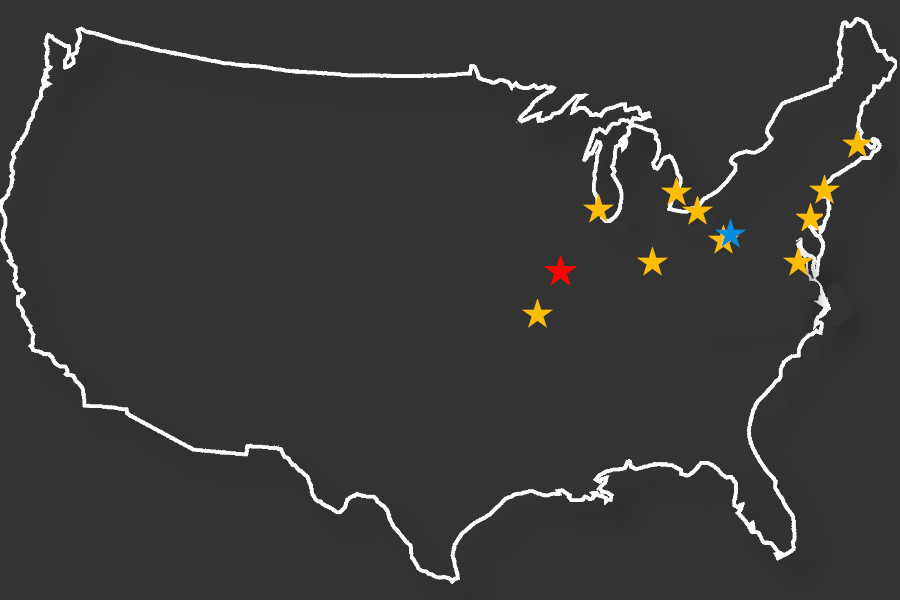
Several names stand out as being born far away from that field. Larry Jansen was born more than 1,500 miles to the west on the Oregon coast. Venezuelan Chico Carrasqual was born in Caracas 720 miles away from the Equator. Despite the presence of four Canadians in the checklist, Bobby Thomson was the northernmost player, having immigrated from from Glasgow Scotland. Traveling the furthest from his birthplace was Elmer Valo, having been born nearly 5,000 miles away from Waggoner in Ribnik, Czech Republic. The reason for his move seems clear, with this border city seeing its population collapse by 95% after Germany sought to unilaterally redraw the map.
As Valo’s case makes clear, where people are born does not necessarily reflect the same place as where they live out their lives. The 1950 US Census reported a geographic population center alongside a creek in Richland County, Illinois (38° 50’21” N, 88° 22’8” W). Among members of the ’52 Topps checklist, the geographic center of their homes is found in another field just outside of Elkville, Illinois (37°53’52.8″N 89°14’48.1″W), roughly 110 miles to the southwest of the general population. Interestingly enough, this implies the average ballplayer lived further south than the southernmost major league ballpark (St. Louis).
Among individual players, Chico Carrasqual once again takes the title as living furthest south (and east) from this location. Larry Jansen is still likewise the furthest west, electing to maintain his permanent residence out in Oregon. The most northern ballplayer address could be found at Cuddles Marshall’s doorstep in Bellingham, Washington.
The Most Typical 1952 Ballplayer Is…
Which baseball player in this checklist blends in the most? I took each of the demographic categories discussed above and identified the mean for each quantifiable metric, comparing the squares of differences for each player and that of the overall average. For more qualitative categories such as hair and eye color, I identified the most frequent response. Based on this, we’re trying to identify the card closest to depicting a brown haired, brown eyed 30 year old who stands 6′ tall and weighs 185 lbs, hailing from Waggoner, IL but residing a bit south of Saint Louis on the Illinois side of the river.
The demographic center of the ’52 Topps set arrives in the fifth series and takes the form of the Philadelphia Athletics’ starting catcher. Brown-haired, brown-eyed Joe Astroth celebrated his 30th birthday during the 1952 season. He stood 5’10” tall and weighed 187 lbs. He was born in East Alton, Illinois and continued to make his home along the Mississippi River in Alton, just 100 miles from the geographic center of the checklist.

A lot of the baseball cards produced today tend to blur together. With their similar photos, standard white borders, geometric color blocks, and an ever-expanding palette of parallels that rarely match the quality of their ’90s predecessors, modern sets can feel remarkably uniform. Aside from a few recent standouts like the 2025 run, I often have a difficult time determining which year a modern Topps card was printed without flipping it over and, as collectors have done for decades, skipping right past the unchanging demographic data just to find the most recent row of stats.
Yet, for all its vintage appeal, the 1952 Topps set that I am so engrossed in collecting shares this same visual sameness. At times it feels like driving past those unchanging corn fields at the geographic center of the baseball universe. When you look closely, the set is essentially a massive collection of slightly bored-looking 30-year-olds, almost all hiding their (possibly) brown hair under ballcaps, posed against Flexichrome-colorized or washed-out backgrounds. When you crunch the obscure demographic data on the backs of these cards, the checklist begins to converge into a single, remarkably average baseline; ultimately, it’s a set full of Joe Astroths.
It’s not a bad card of an average Joe.